- The 6R80 solenoids manage hydraulic pressure and clutch application to control gears and the torque converter.
- Each solenoid (SSA, SSB, SSC, SSD, SSE, LPC, TCC) is linked to specific relationships and specific error codes.
- The correct diagnosis requires differentiating between electrical circuit failures and hydraulic functional failures.
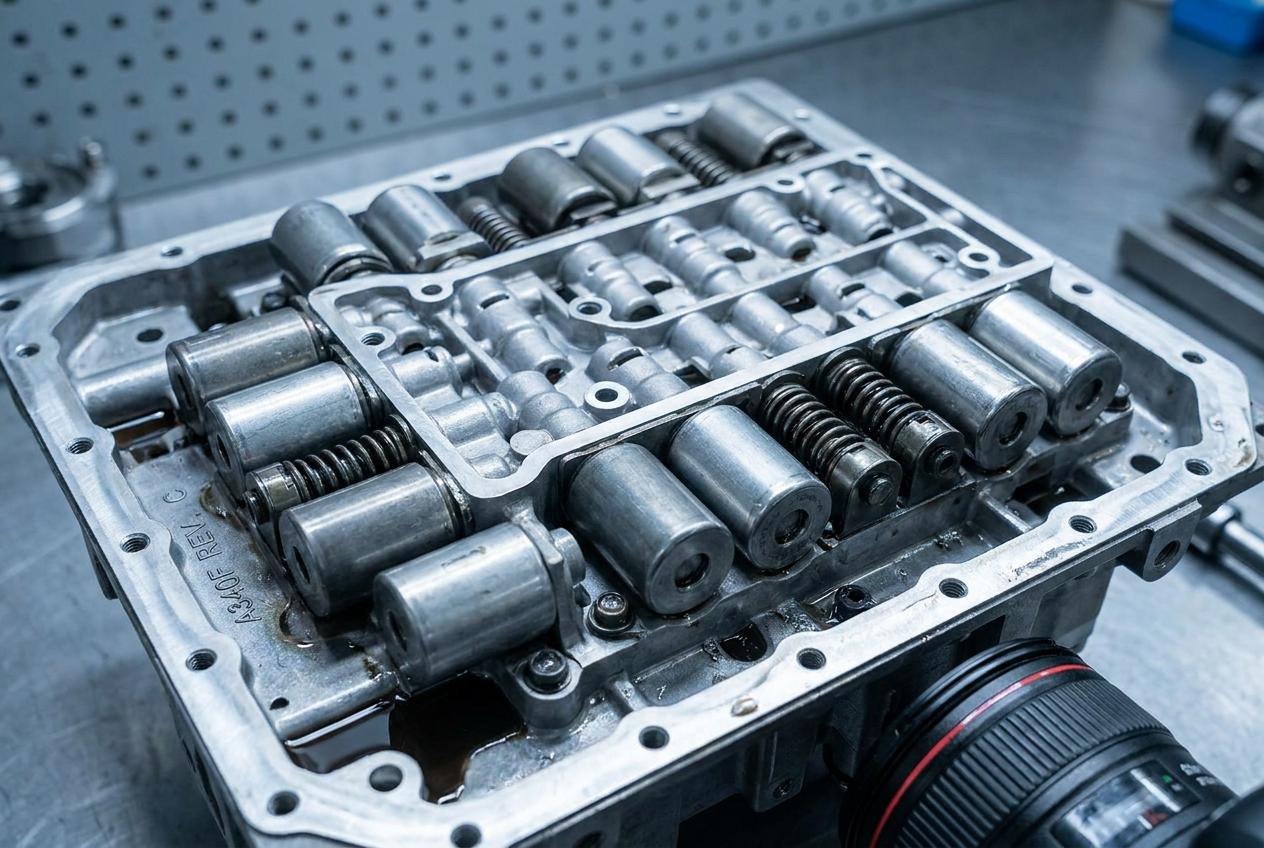
If you own a Ford and notice that the gearbox isn't shifting smoothly, the problem is most likely with the 6R80 transmission solenoids . These parts are essentially the hydraulic brains that decide when and how to apply pressure to ensure smooth and precise gear changes, preventing engine strain and annoying jerking.
It's not just about replacing parts for the sake of it, but about understanding that each actuator has a specific function. When one of them fails, the car starts giving clear warnings, such as slippage or loss of gears , which, if not addressed in time, can lead to a much more costly and complicated breakdown to fix in the workshop.
Functioning and division of tasks of solenoids
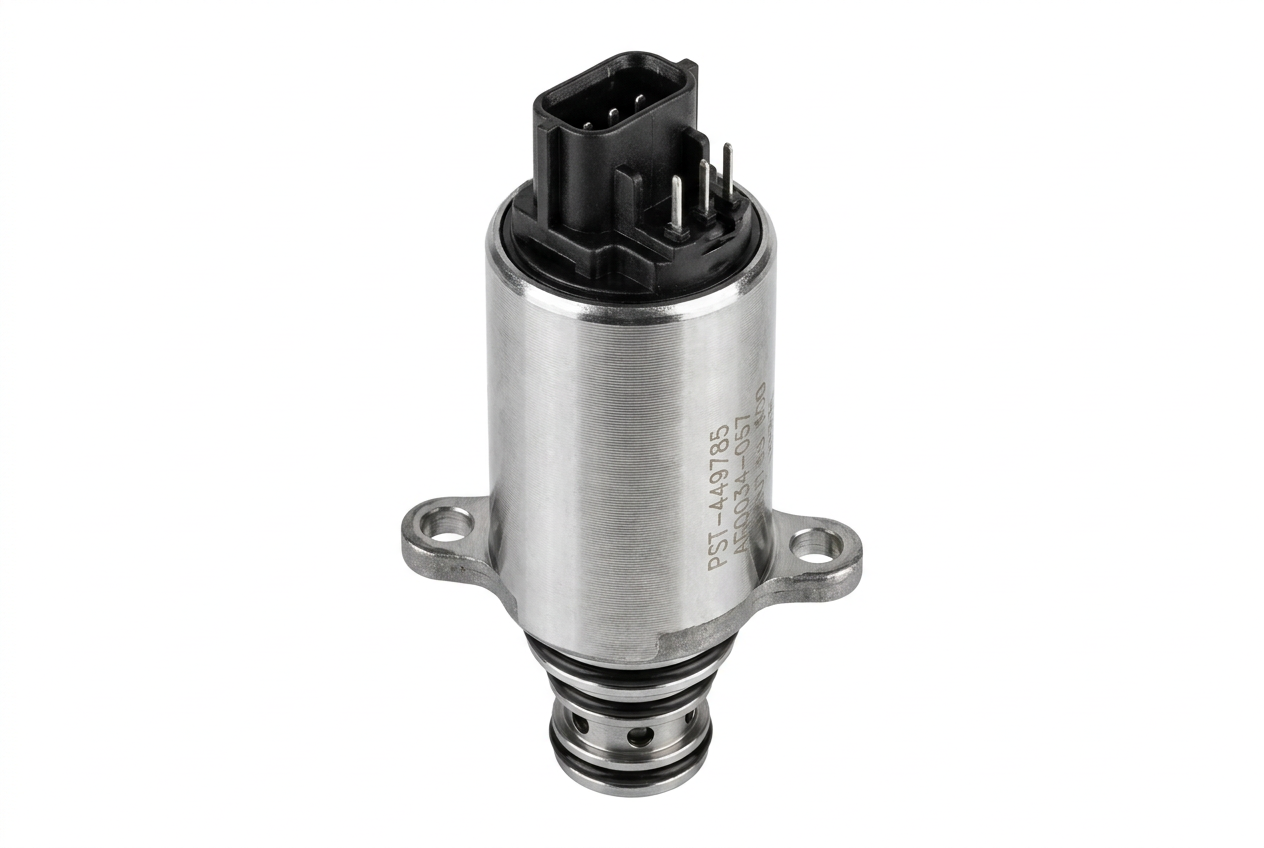
The 6R80 transmission relies on a set of seven different solenoids (SSA, SSB, SSC, SSD, SSE, LPC and TCC), and each one has its own "deck" of control over the internal elements of the shifter.
- SSA (CB1234 Control): This is responsible for managing the pressure of element CB1234, which is essential for the first four gearsIf it starts to malfunction, you'll notice the car skidding or the gears not shifting smoothly. Typical error codes are P0750 for circuit faults, while P0751 and P0752 indicate a functional problem, requiring a look beyond the solenoid and a check of the hydraulics.
- SSB (C35R Control): Their job is to control the C35R clutch, key to the third, fifth gear and reverseIf you feel harsh jolts when shifting into these gears, this circuit is the prime suspect. Electrical faults are indicated by code P0755, and functional faults by codes P0756 and P0757.
- SSC (CB26 Control): This solenoid controls element CB26, which acts on the second and sixth gearA fault here usually results in abrupt gear changes or, in the worst case, the gears simply disappearing. The associated codes are P0760 (circuit) and P0761/P0762 (operation).
- LPC (Line Pressure Regulation): It's what sets the pace for overall hydraulic pressure. If the LPC isn't working properly, you'll notice Sharp clunks when pressing D or RIt is vital not to rush and to check the wiring before changing it, as codes such as P0960, P0962 or P0963 can be simple short circuits.
- SSD (Shared Control CBLR and C456): This is a multi-purpose solenoid that regulates the pressure of CBLR (for reverse and engine braking in first gear) or C456 (for fourth, fifth, and sixth gears), depending on the location of the multiplexer valve. P0765 indicates circuit faults, while P0766 and P0767 indicate application problems.
- SSE (Multiplexer Valve): Unlike others, this one functions as an on/off switch. Its sole purpose is decide which path the flow follows so that the SSD acts on CBLR or C456. The codes P0770, P0771 and P0772 help to know if the solenoid has died or if the valve has become stuck.
- TCC (Torque Converter Clutch): It's responsible for reducing torque converter slippage. If it fails, the car may vibrate at a constant speed or even shut off when stopped if the clutch is not released. P0740 indicates an open circuit, and P2758 indicates an unwanted, persistent clutch application.
How to find the fault without going crazy
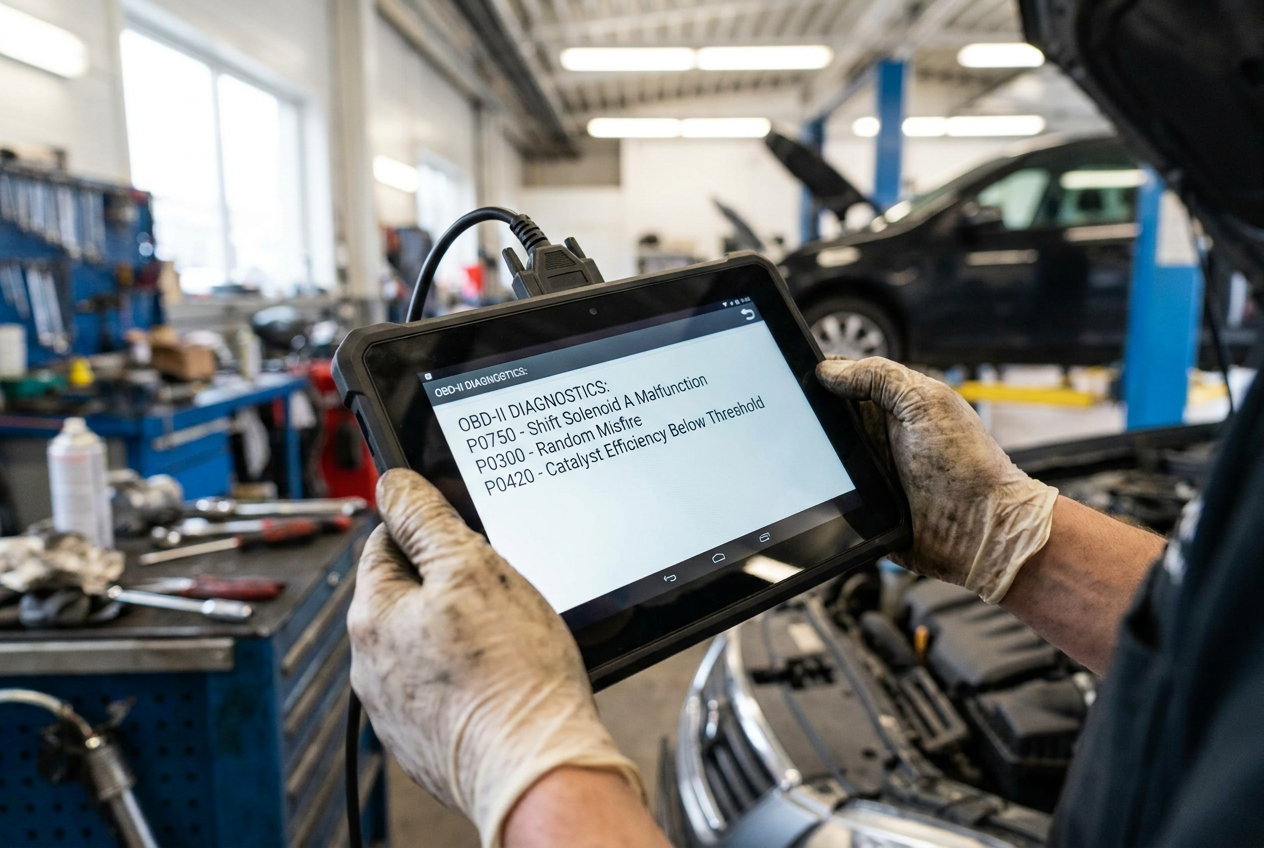
To avoid wasting money on working parts, the best approach is to cross-reference the data. For example, if the car only misfires in second and sixth gear, the problem is almost certainly with the CB26 control unit and the SSC solenoid . If the problem occurs in third, fifth, and reverse, the focus should be on the C35R circuit and the SSB.
In the case of the SSD and SSE solenoids, things are trickier because they share functions. If you notice that reverse is malfunctioning but also the higher gears, you need to evaluate both the SSD pressure regulation and the correct selection of the multiplexer valve.
Steps for a professional diagnosis
The first thing to do is not to touch anything without first recording the DTC codes and noting the exact conditions under which the fault occurs. Not all Ford models use the same diagnostic strategy, so the tests must be adapted to the specific year and vehicle.
The next step is to separate the wheat from the chaff: to differentiate between an electrical and a functional fault . If it's electrical, we focus on the cables, connectors, and the actuator itself. If it's functional, the problem could be in the hydraulic circuit or the clutch, even if the scanner indicates a solenoid issue. To be sure, performing a hydraulic pressure test is the best way to confirm what's really happening inside the transmission before deciding to replace any components.
Understanding the relationship between error codes, the car's physical symptoms, and hydraulic operation allows for efficient troubleshooting of 6R80 transmission problems, avoiding unnecessary replacements and ensuring that pressure management and gear changes regain their original smoothness.