- It comes with a 1,34-inch AMOLED screen and an ultra-lightweight design that prioritizes everyday comfort.
- It stands out for being the brand's first bracelet with a replaceable battery, drastically extending its lifespan.
- It integrates advanced ECG, SpO2 and high-precision GPS sensors, powered by AI through Google Health Premium.
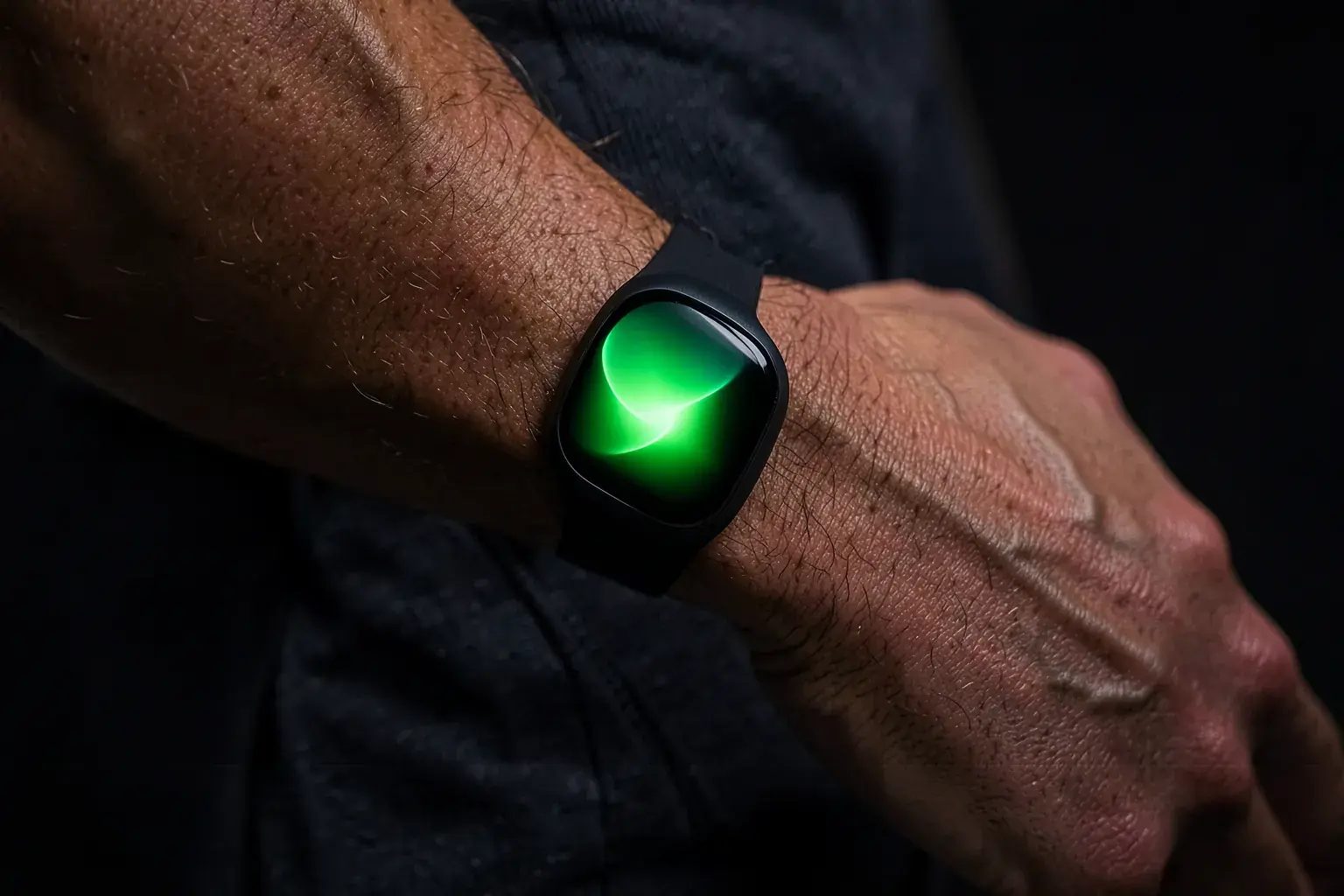
If you're looking for a device that strikes the perfect balance between a simple fitness tracker and a complex smartwatch, the new Google Fitbit Edge is here to fill that gap. It's not just a cosmetic refresh, but a clear commitment to sustainability and technical precision, offering users a powerful tool for monitoring their health without feeling like they're wearing a brick on their wrist.
What's most striking about this launch is how Google has listened to the common complaints about planned obsolescence. By introducing a user-replaceable battery , the company breaks with the tradition of discarding the device when battery life declines, making it a much smarter and more eco-friendly option for those who don't want to spend money on a new model every two years.
Careful design and a dazzling screen
In terms of its appearance, the Fitbit Edge boasts a sleek, smooth silhouette that fits perfectly on the curve of your arm. At just 11,5 mm thick and incredibly lightweight (around 17,7 grams without the strap), it's so comfortable you might forget you're wearing it, even while you sleep. Its chassis is made from 100% recycled aluminum , reinforcing Fitbit's commitment to the environment.
The main attraction is undoubtedly its 1,34-inch AMOLED display , protected by Gorilla Glass 3. This screen is 46% larger than the one on the previous Charge 6, making it easy to read your stats. It also features an Always-On Display mode to keep the time and your key data visible at all times, although this does impact battery life. For navigation, Google has added a redesigned physical side button that offers a very satisfying tactile response, ideal for pausing a workout when your hands are sweaty or you're swimming.
Advanced health and professional monitoring
When it comes to sensors, the Edge doesn't hold back. It includes an electrocardiogram (ECG) to monitor for atrial fibrillation and heart rate sensors optimized for intense activities like spinning or HIIT. It can also measure blood oxygen saturation (SpO2) and skin temperature, crucial data for accurately tracking the menstrual cycle or detecting when the body starts to get sick.
One of the crown jewels is the Health Guardian feature . This system doesn't just give you numbers; it analyzes long-term trends, alerting you if your heart rate falls outside normal parameters or if it detects respiratory abnormalities. For the more athletic, the inclusion of a built-in altimeter lets you know exactly how many floors you've climbed or the elevation gain of your hiking route, complementing the overall health information.
For those who don't want to rely on their phone while running, the Fitbit Edge is a quantum leap thanks to its integrated GPS (compatible with Galileo, GLONASS, BeiDou, and QZSS), which is 40% more accurate than previous models. It also allows you to use Google Maps navigation directly on your wrist with turn-by-turn directions, a huge plus in unfamiliar cities.
The device can automatically detect over 100 different activities, so you don't have to worry if you forget to press the start button. For those looking to optimize their performance, it offers metrics such as cardiovascular load and VO2 max , helping you understand if your body is recovering properly or if it's time to give it a break.
Autonomy, charging, and the Google ecosystem
The 65 mAh battery is surprisingly efficient. With normal use, it can last up to 7 days straight , although if you activate the always-on display, the time drops to about 2 days. The best feature is its fast charging : just 5 minutes plugged in provides enough power for a full day of use, and a full charge is achieved in about 90 minutes using a magnetic USB-C cable.
All of this is managed through the Google Health app , compatible with Android 11 and iOS 16.4. A key feature is the Google Health Premium subscription , which includes a Gemini-based (AI) personal trainer . This assistant not only creates workout plans tailored to your schedule but also analyzes your food photos and sleep data to provide personalized advice in real time.
Quick comparison and final considerations
- Compared to the Fitbit Air: The Edge is more expensive, but it adds a screen, GPS, and altimeter, making it the logical choice for athletes.
- Compared to the Pixel Watch 5: The watch is a hub for notifications and apps with Wear OS, but the Edge wins hands down in battery life and lightness.
- Compared to the Charge 6: The Edge improves the screen and adds a replaceable battery, although NFC function lost for mobile payments.
The device launches with a base price of €179,99 , and a special Stephen Curry edition is also available for €219,99. It comes in colors such as olive green, obsidian, mist gray, and sandstone. While it doesn't support wireless payments or have an app store, its focus on health and durability sets it apart from competitors like Xiaomi and Huawei.
This bracelet strikes a solid balance between durable hardware and intelligent software, standing out particularly for its repairability and the accuracy of its medical sensors. Despite lacking NFC, it positions itself as the ultimate tool for those who prioritize comprehensive monitoring of their physical well-being and extended battery life without sacrificing the elegance of a minimalist design.