- Lost Life offers narrative gameplay with multiple endings depending on your decisions and how you treat the girl.
- Properly configuring graphics, FPS, resolution, and sound is key to smooth performance on PC, Android, and iOS.
- Exploring scenarios thoroughly and talking to all characters allows you to unlock secret routes and hidden content.
- Mastering controls, managing the girl's emotional state, and planning decisions increases the chances of achieving a happy ending.

If Lost Life and its decision-driven gameplay have caught your eye , you're probably a little lost about how to play , what endings it has, and what you need to do to get the one you want. You're not alone: with multiple routes, secrets, and different versions for PC, Android, and iOS, it's normal for it to seem a bit chaotic at first.
In this guide, you'll find a complete explanation in Spanish of how Lost Life works: from recommended settings and starting the game, to the different endings (good, neutral, bad, and secret), including tips on controls, exploration, and gameplay techniques. The idea is to help you play more calmly, better understand what's happening, and enjoy the experience without constantly going in blind.
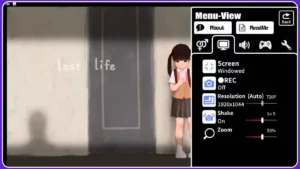
What is Lost Life and why is it so addictive
Lost Life is a narrative-driven game with horror elements where your choices shape the story. Instead of progressing through linear stages, almost everything revolves around how you interact with a mysterious schoolgirl and the surrounding environment, opening the door to several possible endings.
The game is available on various platforms: Lost Life for PC, Lost Life APK for Android, and an iOS version . Although the core gameplay is the same, each version may have slight differences in performance, controls, and how to access certain content, which can be quite confusing for novice players.
The beauty of Lost Life is that it's not just a button-mashing game: every choice has consequences . As you progress, you'll unlock scenes, the girl's emotional reactions, and events that push you toward one ending or another. This makes each playthrough unique and encourages replayability to see what happens if you choose differently.
Another reason Lost Life has gained popularity is that, as you progress through the chapters, the challenges become more demanding : new obstacles appear, more difficult decisions arise, and there are moments where it's easy to make mistakes. That's why a structured guide is so helpful in avoiding getting stuck and missing key opportunities.
How to start playing Lost Life on PC, Android, or iOS
The first step is to obtain a reliable version of the game: download Lost Life from a secure source to avoid corrupted or malware-infected files, which are quite common with APKs. On PC and iOS, the process is usually more controlled, but on Android, it's advisable to carefully check the file's source.
Once you have the installer, complete the installation following the standard steps for your operating system. On Android, you'll need to allow the installation of apps from unknown sources if you're using an external APK; on PC, simply run the file and accept the permissions; and on iOS, it will depend on the authorized method you're using.
Once you can open the game, it's crucial to spend some time exploring the menus before diving in. Lost Life lets you adjust various graphics, sound, and language settings that directly impact the gameplay experience. Spending a few minutes here will save you from many lags and frozen screens later on.
With everything set up, the first playthrough should be approached with an exploration mindset: don't try to nail the perfect ending on your first try . Instead, focus on understanding the mechanics, seeing how the girl reacts to your decisions, and familiarizing yourself with the interface and controls.
Improved configuration settings for smooth gameplay
Most problems players experience with Lost Life stem from poor graphics and performance settings . Properly adjusting these settings is crucial, especially on mobile devices with limited or older hardware.
In the video menu, you'll find graphics quality options, usually divided into several levels of detail, from low to high. If your device is modest, lower the graphics quality to medium or low to avoid stuttering. You'll lose some visual quality, but you'll play much more comfortably.
The frame rate (FPS) setting is also key. Ideally, you should aim for 60 FPS for a smooth experience , but if you notice the game is choppy, lower the limit to 30 FPS. On many phones, this stabilizes performance and reduces battery consumption.
Regarding resolution, the higher the resolution, the sharper the scenes will appear , but it will also be more demanding on the processor and GPU. If your phone overheats or runs out of battery quickly, try lowering the resolution by one point: the visual difference is usually small, and the performance improvement is noticeable.
The game also lets you adjust the opacity of menus and the interface. Playing with this helps to clear the screen and improve your view of the environment , which is useful in dark or detailed scenes. Try lowering the opacity of the HUD elements if you feel they're obscuring too much.
In terms of sound, it's best to keep effects and music at a sufficient level so you don't miss important auditory cues, as they reinforce the atmosphere of terror and can foreshadow events. If you don't like playing with loud music, simply lower the music volume but leave the sound effects a bit more prominent.
Finally, check the game's language. Setting it to a language you fully understand is vital, because many nuances of the decisions come from the dialogues and descriptions. Understanding each sentence clearly makes the difference between making informed choices and just guessing.
The player's role and his relationship with the girl
At the heart of Lost Life is your connection to an enigmatic schoolgirl who initially seems innocent , but whose personality is gradually revealed and distorted by your actions. Your role is not only to advance the story, but also to care for (or neglect) her through countless small decisions.
The game functions almost like an emotional simulation: every action influences the girl's mood , her confidence, and how she perceives you. Sometimes these are obvious decisions (protecting her or ignoring her), but other times they are subtle choices in dialogues or small interactions with the environment.
Finding the right balance is tricky: if you're too cold, you can provoke negative reactions and trigger dark paths ; if you're overly protective, you can also create unexpected and not always positive consequences. The game punishes extremes and rewards thoughtful decisions.
That's why it's crucial to pay attention to both what they say and what they don't say. Looks, gestures, and subtle changes in attitude offer clues about how they feel. Interpreting these signals correctly helps you anticipate their reaction to your upcoming choices and what outcome you're heading towards.
Over time, you'll see that Lost Life isn't so much about "winning" as it is about understanding the girl's psychology and her reactions . That's the key to guiding the plot toward the ending you want without forcing random decisions.
All the endings of Lost Life and how they are triggered
One of the game's greatest strengths is that it has multiple possible endings in each version , which greatly increases replay value. There isn't just one correct way to finish; instead, there are different outcomes depending on the combination of your choices.
The so-called "happy ending" is achieved when you have been consistent and responsible in caring for the girl . This means prioritizing her safety, health, and emotional well-being for most of the game, avoiding clearly harmful or selfish actions. It's not just about always choosing the "softest" option, but about demonstrating consistent protectiveness.
If your decisions have been inconsistent, combining supportive moments with oversights or ambiguous actions, you're likely to end up with a neutral conclusion, where not everything goes perfectly nor completely wrong . It often leaves a bittersweet feeling: you've done some things well, but others have been significant enough to prevent the story from ending entirely positively.
The "bad ending" occurs when your choices clearly lean towards the dark side: acts of indifference, cruel decisions, or a complete lack of care . In this outcome, the story veers towards suffering and emotional deterioration, reinforcing the tone of terror and unease that the game maintains in its most difficult moments.
In addition, there are secret endings that are only unlocked after fulfilling very specific conditions or discovering hidden routes . These usually require subtle combinations of choices, thoroughly exploring certain areas, or replaying chapters with a different approach to access new scenes.
These special endings expand on lesser-known parts of the story, add layers to the characters' backstories, and in some cases, unlock extra content, additional scenes, or alternate modes . That's precisely why so many people replay Lost Life multiple times: the curiosity to see all the variations is incredibly addictive.
What does “winning” mean in Lost Life and how to find your way around it
Since it's not a classic scoring or lives game, the idea of "winning" in Lost Life is understood as reaching the ending that best suits your goals . For many players, that means getting the happy ending, but there are also those who specifically seek out the darker endings to see how far the story can go.
Throughout the game, there are decisions that are veritable points of no return: if you choose poorly at certain key moments , you'll close the door to the happy ending, even if you try to compensate later. That's why it's wise to carefully consider each major choice and, if you want to optimize your performance, mentally note what you did in each chapter.
Lost Life also includes moments of "non-response," or actions that, although they may seem to have no immediate effect, are recorded and affect the plot . You won't always see an instant reaction; sometimes the consequence arrives several chapters later, when you no longer even remember that specific decision.
The key is to maintain a consistent attitude throughout the game: if you start by taking care of the girl, continue along that path with patience and attention, interacting with the environment to unlock clues and solutions to puzzles that lead you to the most favorable routes.
Of course, motivation also plays a role. There are some challenging sections where it's easy to get frustrated, but the more you explore, the more shortcuts, secrets, and little tricks you'll discover that allow you to steer the story in the direction you want without having to constantly restart from scratch.
Unlocking hidden content and features
As you progress through the story, you'll see that new areas, scenes, and interaction options open up chapter by chapter . Unlocking content in Lost Life is closely tied to narrative progress and the player's curiosity.
Some features are obtained simply by completing certain episodes or achieving clear objectives. Others, however, require thoroughly investigating rooms, objects, and corners that at first glance don't seem important, but which hide clues or special events.
The game also rewards the achievement of specific milestones, a kind of hidden accomplishment that, when activated, can unlock new scenes, alternate routes, or special abilities related to the story. These aren't always heavily advertised; they're often subtly integrated into the narrative.
Furthermore, certain endings unlock routes that weren't available in the first playthrough , which is why a "New Game" can be different from the initial one. This adds replayability and makes your past decisions resonate even beyond the first playthrough.
If you want to get the most out of the game, the best strategy is to combine normal progress with extreme curiosity: touch everything, read everything, and try everything , because any seemingly irrelevant detail can serve as a key to unlock hidden content.
Mastering the controls and interface of Lost Life
In Lost Life, gameplay is primarily based on tapping, pressing, and swiping to interact with the world . Familiarizing yourself with these gestures will allow you to react in time when fast-paced events occur or when your margin for error is small.
Basic interaction involves tapping on objects, characters, or points in the environment to examine, collect, talk, or trigger events . Sometimes a single element allows for multiple actions depending on the context or the moment in the story.
Swipe gestures are used to navigate menus, change interface sections , open inventories, check settings, or switch tabs within the game. It's a good idea to experiment with them at first so you don't waste time later when you need them.
You'll also find on-screen buttons that take you to the main menu, inventory, settings, and other key options. Knowing where everything is is essential, because in some scenes you'll need to quickly access certain menus or elements without having to think about where they are.
Some actions are time-sensitive: if you take too long to react, you lose the opportunity or the event goes wrong , which can change the course of the story. That's why there's nothing like practicing a bit, repeating scenes if possible, and getting used to how the screen and controls respond.
Strategies and techniques for making better decisions
To get the most out of Lost Life's gameplay, it's not enough to just improvise: it's advisable to apply certain decision-making and resource management techniques that reduce the risk of unintentionally heading towards a bad ending.
On one hand, there's the timing factor: some actions can only be performed at very specific moments in the story or within the game. If you miss them, you might lose the chance to unlock an important event, so pay attention to time-related and contextual clues.
Furthermore, it's very useful to calmly inspect your surroundings. Many locations are full of details where clues, mysteries, and secret locations are hidden . Examining books, electronic devices, furniture, or notes can give you crucial information to make your next decision wisely.
Resource management also plays a role, even though it's not typically a "resource-driven" game. We're talking about things like considering the girl's emotional state, the availability of certain items , or the possibility of returning to an area later. If you use an opportunity at the wrong time, you might not get it back.
Another useful approach is to test alternative responses in repeatable situations: when the story allows, try out different ways of solving the same problem to see how the girl's personality and the overall direction change. This will give you a mental map of what kinds of actions lead to each ending.
Taken together, these techniques make Lost Life more than just a succession of scary scenes: it becomes a game of analysis, memory, and experimentation , where every decision counts and where knowing its systems well is a huge advantage.
World exploration, secrets, and a terrifying atmosphere
One of the biggest draws of Lost Life is that its world is full of objects and interactive elements . Televisions, telephones, books, furniture, small decorations… almost everything can hide a clue or trigger a change in the story.
Exploration is not optional if you want to see everything the game has to offer. Many alternate routes and important pieces of backstory only appear if you thoroughly investigate the rooms and talk to all the available characters, even those who seem minor.
The NPCs (non-player characters) provide a great deal of context to the plot. Their dialogue offers clues about what's happening, suggests possible decisions , and sometimes opens up quest lines that lead to new subplots and locations. Listening to them carefully is essential.
Added to all this is an atmosphere of psychological horror that can manifest itself at any moment: unexpected apparitions, unsettling sounds, sudden changes in the environment . These touches of terror reinforce the tension and force you to always be on your guard.
Within the game's walls lie a multitude of hidden mysteries, some easily missed on a first playthrough. The more you pay attention to detail and connect the dots between different scenes, the more hidden connections and secrets you'll uncover that give meaning to the whole.
With all this, Lost Life becomes an immersive experience where constant exploration, analyzing decisions, and caring for the girl intertwine to build a constantly evolving story. Playing slowly, observing every corner, and carefully considering your actions at every moment is the best way to enjoy gameplay that rewards both curiosity and patience.

Table of Contents
- 1 What is Lost Life and why is it so addictive
- 2 How to start playing Lost Life on PC, Android, or iOS
- 3 Improved configuration settings for smooth gameplay
- 4 The player's role and his relationship with the girl
- 5 All the endings of Lost Life and how they are triggered
- 6 What does “winning” mean in Lost Life and how to find your way around it
- 7 Unlocking hidden content and features
- 8 Mastering the controls and interface of Lost Life
- 9 Strategies and techniques for making better decisions
- 10 World exploration, secrets, and a terrifying atmosphere