- Planning shifts and recording working hours remotely requires digital tools connected to payroll and calendar to reduce errors and detect conflicts.
- Managing tasks with boards, sprints, and time tracking provides real visibility into the work, facilitates prioritization, and improves team productivity.
- Asynchronous communication, golden hours, and a solid knowledge base are key to coordinating time zones and avoiding inefficient meetings.
- Long-term success depends on combining time data with culture, well-being, and leadership that fosters autonomy, belonging, and life balance.
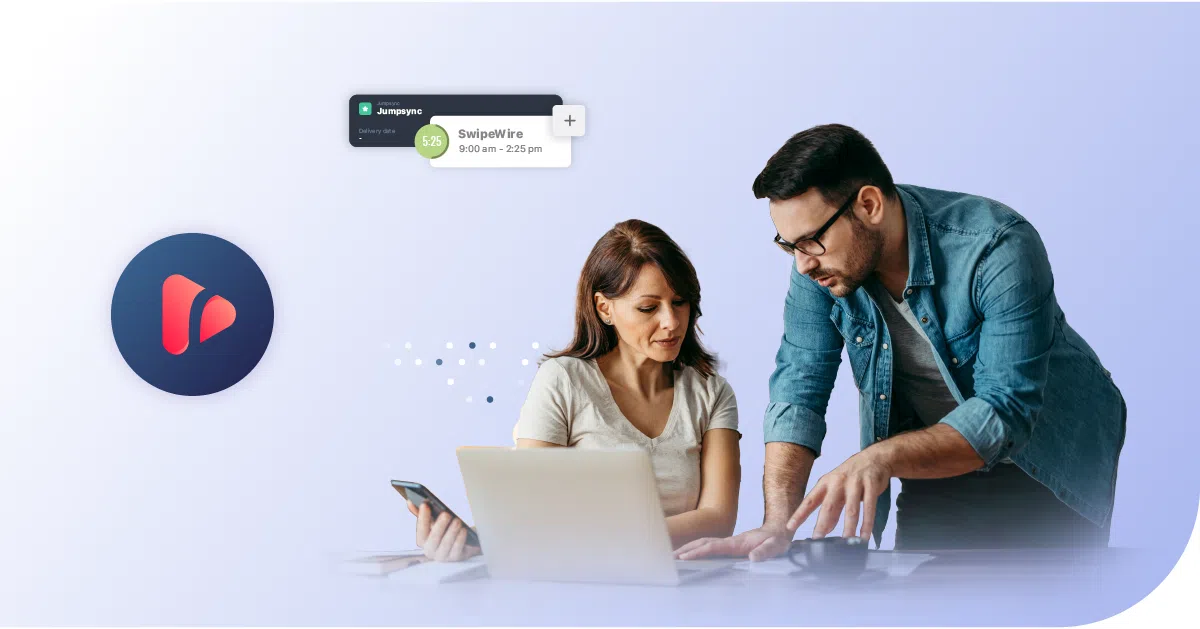
The workplace has changed rapidly, and today distributed teams and hybrid work have become commonplace in many companies. Simply "seeing people in the office" is no longer enough: now it's essential to know who is doing what, when, and from where, without sacrificing efficiency or causing burnout.
In this context, managing the working hours of teams spread across different cities and time zones is one of the biggest challenges for any manager or team leader. It's not just about tracking hours, but about coordinating shifts, projects, communication, culture, time tracking, and well-being, leveraging digital tools and a more mature and transparent leadership style.
What exactly is a distributed team (and how does it differ from a remote or hybrid team)?
A distributed team is one whose members work from different locations , either 100% remotely or with a combination of offices in multiple places. The only thing that doesn't exist is a single headquarters where everyone is physically present. You can have 20 people in 20 different countries, or a core group in one office and several people in other cities or countries.
In a remote team , the entire staff works outside a central office, but they might live in the same city. In contrast, a hybrid team combines in-office work at a specific location with days of remote work; it's usually concentrated in a similar geographic area, although it can also be global if there are several offices spread across different locations.
When a company adopts a truly distributed model, it shifts its mindset from local to global : it expands its market, accesses international talent, integrates different cultures, and must learn to coordinate work, communication, and schedules without everyone being in the same place or time zone.
This type of structure opens up a world of opportunities, but it also forces us to rethink classic processes of managing people, time and performance : shift planning, task tracking, timekeeping, meetings, onboarding, training, feedback and corporate culture.
Operational and talent advantages of distributed teams
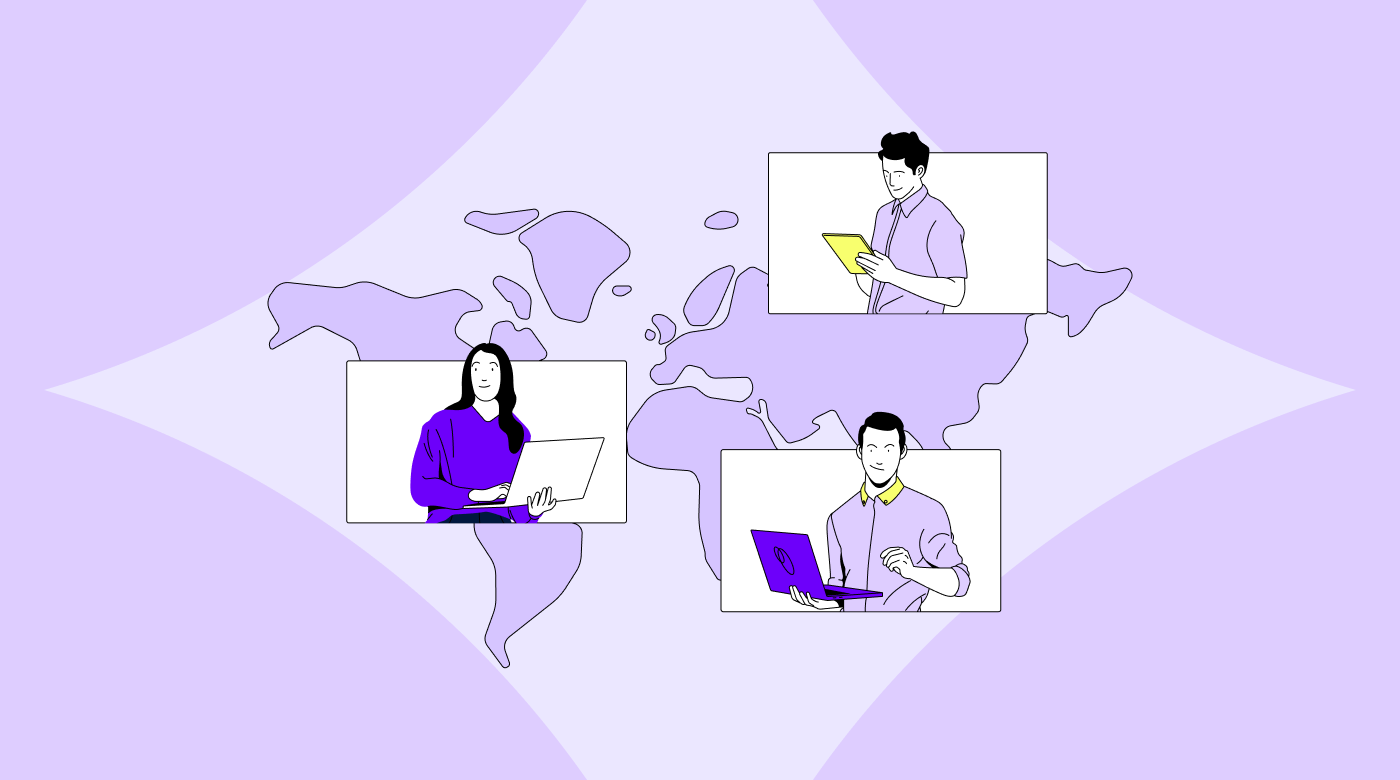
One of the great advantages of this model is that it allows access to a much broader talent pool . You're not limited to a specific city: you can recruit the right person wherever they are, which is crucial when you need highly specialized profiles or people with local knowledge of certain markets.
Furthermore, cultural and experiential diversity is amplified. Working with people from different countries and backgrounds enriches the approach to products, customers, and internal processes. It broadens perspectives and reveals market nuances that a local team would rarely notice.
From an operational standpoint, a well-distributed team can leverage time zone differences to work almost continuously . While one part of the team sleeps, another works on tasks; this allows for faster deliveries, improved customer service across multiple countries, and coverage of critical time slots without the need for impossible shifts at a single location.
There is also an economic component: savings on real estate and utilities are often significant, and in many cases more than offset the cost of the necessary digital solutions (communication software, project management, time tracking, etc.). Employees, for their part, save time and money on commuting and improve their work-life balance.
Moreover, when done well, collaboration can be even more equitable . In distributed environments, asynchronous communication (documentation, written messages, recordings) gives a voice to more introverted individuals who might speak less in face-to-face meetings. Everything is recorded, and anyone can review information at their own pace.
Specific challenges in managing time in distributed teams
The many advantages don't mean it's all smooth sailing. Coordinating people spread across multiple time zones makes scheduling meetings, resolving doubts immediately, and perfectly synchronizing work difficult. Often, you have to abandon the idea of "everyone being online at the same time."
Communication without body language is another obstacle. Without constant face-to-face interaction, nuances are lost, the risk of misunderstandings increases, and you have to make twice the effort to explain yourself clearly, both when giving instructions and when giving feedback.
Cultural and linguistic differences also come into play : different ways of understanding punctuality, hierarchy, conflict, or even humor. If not addressed with training and empathy, this can generate absurd conflicts or silent friction that ultimately affect performance.
Furthermore, there is a risk of isolation and a lack of belonging . Without a shared physical space, it's easier for someone to become emotionally disconnected from the rest and feel like they're "just doing their own thing." Keeping the culture and human connection alive requires an intentional and sustained effort from leadership and HR.
Finally, if not properly designed, time management can become chaotic: meetings at impossible hours, unrealistic expectations, constant multitasking, and endless workdays . Without clear rules, workload visibility, or good tools, a feeling of being out of control quickly sets in.
Advanced shift management in geographically dispersed workforces
In companies with intensive operations (support, production, retail, logistics, healthcare, etc.), shift planning in distributed environments is critical. Creating schedules in Excel by cross-referencing vacations, absences, holidays, and service needs is a slow, error-prone task with a tremendous administrative burden.
Modern shift management solutions allow for the digitization of the entire process : the manager can view the complete schedule, see who is on sick leave, who is on vacation, how many hours each person has actually worked, and what gaps remain to be filled. The system sends alerts if it detects conflicts (overlapping shifts, unfilled gaps, excessive hours, violations of legal rest periods, etc.).
A key point is that these tools typically connect with payroll and the ERP system . This allows for automatic calculation of night shifts, holidays, overtime, and specific bonuses, reducing errors when preparing payroll and ensuring that the agreed-upon conditions with the staff are met.
Another powerful aspect is the decentralization of shift management . With current platforms, each person can check their schedule from their mobile device , request changes, see who is available, and receive real-time notifications. The manager is no longer the bottleneck for any simple adjustment.
Furthermore, by comparing planned time with actual work time , the company can identify patterns: poorly distributed work peaks, systematically understaffed departments, teams accumulating excessive overtime, and so on. This information is invaluable for redesigning schedules, strengthening departments, and improving service without driving up costs.
Remote task and project management
Beyond shifts, the other key aspect of time management in distributed teams is the organization of tasks and projects . This is especially true in knowledge-based jobs (marketing, development, consulting, design, product development, etc.), where deliverables are more important than hours worked.
Most leaders have discovered that, without the right tools, it's very difficult to track the progress of each initiative : who's doing what, the status of each task, what depends on whom, and which deadlines are at risk. Hence the popularity of task and project management tools that allow objectives to be broken down into concrete actions.
In these environments , Kanban boards are frequently used , with classic columns of "To Do," "In Progress," and "Done." Each task is represented as a card with the person responsible, a description, a deadline, and is often labeled by priority or type of work. At a glance, anyone responsible can see the overall status of the project.
When working with agile methodologies, short sprints (for example, one or two weeks) are organized in which the tasks to be tackled in that cycle are defined. The rest of the backlog is put on hold until the next sprint. Afterward, review and retrospective meetings are held to analyze what worked, what didn't, and how to adjust for the next cycle.
These task management systems are also a powerful tool for improving communication and feedback . Comments, documents, decisions, and questions are centralized on each card or project, preventing endless email threads and allowing everyone to follow the thread even if they weren't present at a particular meeting.
Time tracking: data for decision-making, not for spying
To manage work time effectively, it's essential to measure how much time is actually spent on each task or project . Without data, most decisions are based on feelings ("this project seems to be taking a long time," "we seem to be short on resources"), and this intuition is often riddled with biases.
When used correctly, time tracking tools allow you to systematically capture the actual allocation of hours among projects, clients, internal tasks, meetings, support, etc. Some systems even automate part of the process by detecting which applications are being used or which documents are being used, reducing the friction of having to manually record everything.
Studies show that implementing a good time-tracking system can increase team productivity by up to 30%, with specific improvements of 18-20% for remote teams. When you know exactly where time is going, you can adjust workloads, eliminate low-value activities, and prioritize much more effectively.
From an economic standpoint, the impact is enormous: billing errors are reduced, excessive non-billable time in poorly completed projects is identified, and so-called "time theft" (time paid for but not worked or not dedicated to the required tasks) is prevented. Some estimates suggest annual savings of over one hundred thousand euros for service companies simply by correcting leaks in billable hours.
The key is that this data is used to improve processes and better size , not to obsessively monitor people. When the team perceives that the record helps them plan better, avoid overloads, and negotiate realistic deadlines, acceptance is much higher.
Time tracking and remote clocking systems
From a legal standpoint, many regulations (such as the Workers' Statute in Spain) require daily recording of working hours , including start and end times. This also applies to remote work, so it's not enough to rely on "people organizing themselves." A formal time tracking system is necessary.
There are multiple remote timekeeping technologies on the market : from mobile apps with login and logout, to biometric systems (fingerprint, facial recognition, iris) that identify the worker before registering entry and exit, including cards, passwords or physical devices.
The most advanced biometric solutions rely on artificial intelligence algorithms to compare facial features or fingerprint patterns with a database. Although these technologies have spread worldwide, they have also generated significant ethical debate due to their potential biases and privacy concerns , especially when they have demonstrated lower accuracy with certain groups (for example, Black women versus white men).
For this reason, many organizations are opting for less intrusive methods , such as mobile time tracking, passwords, or cards, combined with clear and transparent data protection policies. The important thing is to maintain a reliable record of hours worked, breaks, and any overtime.
In addition to complying with the law, these systems allow for the detection of patterns of excessive hours, recurring absences, or violations of rest periods by cross-referencing the employee's time record with their calendar. Again, the key is to use this data to promote workplace health and better organize work, not just to issue penalties.
Time management strategies that work at the team level
Beyond the tools, distributed teams need clear methods for deciding what to do, when, and with what focus . Many classic individual productivity techniques (time blocking, Eisenhower Matrix, Pomodoro Technique, Pareto Principle, batching) remain useful, but they need to be adapted to the collective dynamic.
A crucial first step is to measure the team's actual productive time : during which periods they perform best, what types of tasks consume more effort than anticipated, and how much time is spent on meetings, coordination, or administrative tasks. A two- or three-week time audit period usually provides significant insight.
This data can help identify where time is being wasted: meetings without an agenda, constant context changes, duplicate reviews, waiting between steps in the process , bureaucracy that could be automated, etc. Often, the team isn't "wasting time," but rather dedicating it to activities with little return.
Prioritization is also changing: an endless to-do list is no longer enough. It's necessary to use prioritization frameworks (like the urgent/important logic) combined with the team's actual capacity. A task might be crucial to the business, but trying to fit it into the schedule of someone already working at 120% will only generate stress and a chain reaction of delays.
Another key element is protecting blocks of deep work in your calendar. Constantly switching contexts (responding to chats, emails, calls, notifications) destroys concentration; each switch can cost 15-25 minutes to get back into a state of flow. Reserving 90-120 minute blocks of uninterrupted time dramatically improves the quality of creative or technical work.
Finally, it's best to organize work into closed cycles, not endless lists . Weekly or bi-weekly sprints, with clear objectives and a formal closing and review time, allow you to learn from each iteration, adjust estimates, and avoid the feeling of being trapped on a never-ending task list.
Asynchronous communication, meetings and "golden hours"
In multi-time zone teams, expecting everything to be resolved through synchronous communication (calls, live meetings, messages requiring immediate responses) is a recipe for chaos. The solution lies in embracing asynchronous communication as the norm and reserving synchronous communication for critical moments.
Asynchronous communication relies on well-organized channels (thematic group chats, forums, email for more formal or long-term topics) and clear and accessible documentation: wikis, knowledge bases, shared documents where decisions, processes and answers to frequently asked questions are recorded.
When a meeting is necessary, it's crucial to make the most of it: a shared agenda, a clear objective, the right number of people, a limited duration, and, if some members can't attend, recording and structured notes. This avoids repeating the same conversation three times for different time zones.
Some models refer to "golden hours" : that daily or weekly window when several sub-teams with different time zones can coincide. This is the ideal time for key meetings, synchronous training, or collaborative work activities that benefit from real-time interaction.
Another very useful lever is delegating regional leadership . When a large part of a team is in a similar time zone, it makes sense to appoint a point person who can coordinate locally, while regularly aligning with the global leader to maintain consistency.
Building culture, belonging, and well-being remotely
Time management in distributed teams isn't just about metrics and calendars. A team that feels burned out, isolated, or disconnected from the company's mission will ultimately perform worse, even if the spreadsheets balance . That's why culture and well-being must go hand in hand with efficiency.
It is key to take care of the remote recruitment and onboarding processes : select people with a collaborative mindset, good communication, a willingness to share knowledge and tolerance for autonomous work, and then incorporate them with a clear plan, introductions to the rest of the team and easy access to basic information so as not to get lost.
To combat isolation, virtual team building activities can be organized : online games, informal coffee sessions, remote after-work events, internal hackathons, shared challenges… They don't have to be huge events, but they should be consistent and well integrated into the team's dynamics.
Having a dynamic knowledge base is another key element: a place where anyone can find answers to common questions about processes, tools, past decisions, or internal policies. This reduces the reliance on two people being in the same place at the same time to resolve issues and improves the autonomy of new hires.
Finally, it's essential to respect the boundaries between work and personal life . In a remote setting, it's very easy to always be "just a click away" and never truly disconnect. Establishing reference hours, avoiding sending urgent messages outside of those times, accepting that you won't respond instantly, and encouraging genuine breaks throughout the day are basic measures to prevent chronic burnout.
Taken together, all these practices—shift planning, visual task management, responsible time tracking, time measurement, asynchronous communication, good tools, and a focus on culture—form a solid system for managing work time in distributed teams without sacrificing humanity or efficiency . When processes, technology, and leadership are aligned, distance ceases to be a problem and becomes a real competitive advantage.