- The repairability of a mobile phone depends on its internal design, availability of parts, quality of the guides, and absence of software locks.
- Brands like Fairphone and Shiftphones lead in repairability with modular designs, while Samsung, Motorola and some Pixel phones are improving thanks to regulatory pressure.
- Studies by iFixit and Electronics Hub indicate that some models are very easy to repair (Moto G7, Galaxy A40, Fairphone 3) and others are especially difficult, such as the Google Pixel 7.
- Choosing a repairable mobile phone extends its lifespan, saves money and reduces electronic waste, aligning with the EU-driven right to repair.

The smartphone world has become so complex that when a phone shuts down or something malfunctions, many people opt to buy a new one rather than repair the one they already have . Screens glued on with impossible adhesives, proprietary screws, and sealed chassis have turned DIY repairs into an ordeal… but all is not lost.
In recent years, brands and models have emerged that swim against the tide, focusing on easy-to-open designs, readily available parts, and user-friendly repair guides . This is further fueled by regulatory pressure in Europe and the rise of the right to repair, which is forcing even giants like Apple, Samsung, and Google to take action and consider long-term repairability.
How to tell if a mobile phone is easy to repair before buying it
A few years ago, choosing a repairable phone was almost a gamble, but today we have fairly reliable indicators that allow us to assess its repairability before buying it . You don't need to be a technician to understand them; you just need to look for some key seals and features.
The first is the European Repairability Index , a system that originated in countries like France and has spread to the rest of the European Union as part of energy efficiency labeling. It assigns a score from 1 to 10 to each device based on how easy it is to disassemble, the clarity of the official guides, the accessibility of parts, and, very importantly, the price of replacement parts relative to the total cost of the device.
Besides the European index, there's another benchmark that has earned the community's trust: iFixit's repair guides and scores . This website disassembles the leading mobile phones on the market, documents each step with photos, and explains where the pitfalls lie: unusual screws, excess glue, soldered modules that prevent replacing one part without affecting others, and so on.
Another key factor is the availability of original or equivalent quality manuals and parts . If the brand itself sells spare parts on its website (or through official partners) and offers free repair manuals, it's a good candidate. However, if genuine parts are impossible to find or the instructions seem designed to discourage you, that's a bad sign.
Finally, we must consider a factor that is being discussed more and more: software blocking or component serialization . Even in phones that are physically easy to open, some manufacturers program the system to reject screens, cameras, or batteries that are not "approved" by their servers, which can limit functions or trigger constant warnings for the user.
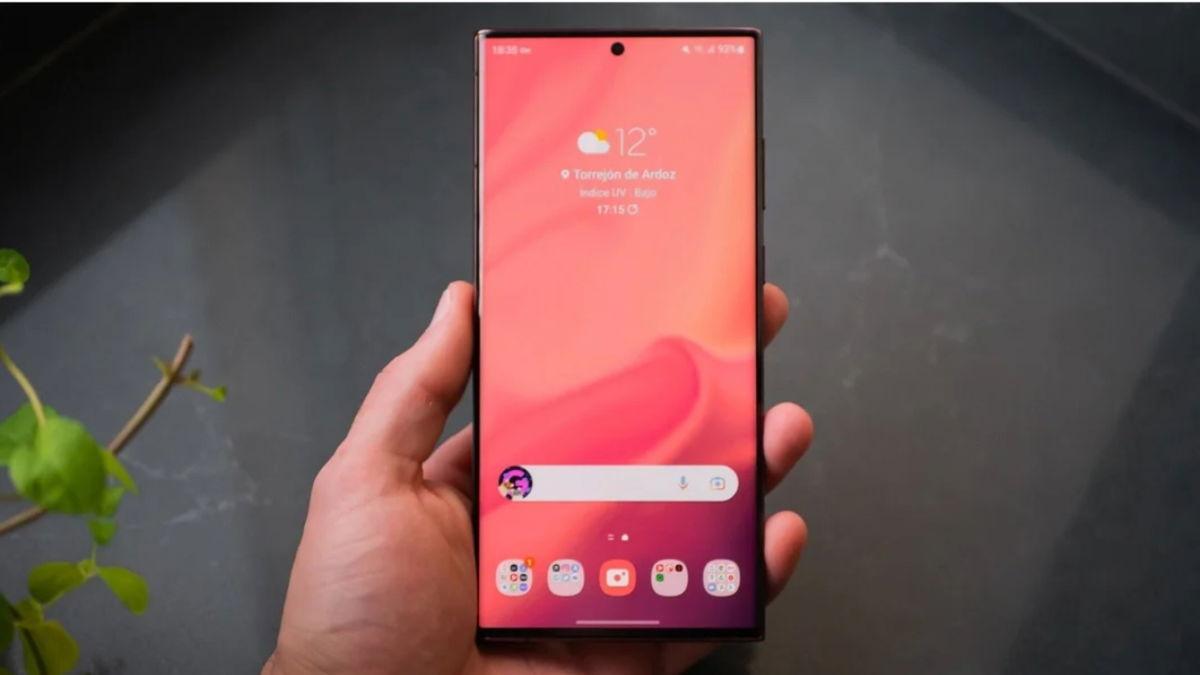
The leading examples: mobile phones designed to be repaired
At one end of the spectrum are a few manufacturers whose business model revolves precisely around repairability, modularity, and sustainability . Their phones are designed almost like a puzzle, with modules that can be disassembled with a standard screwdriver and minimal glue.
Fairphone: the icon of easy repair
Fairphone, a Dutch company, has become the undisputed leader when it comes to easy-to-repair mobile phones . Since its first model in 2013, the company has focused on using raw materials from conflict-free zones and on producing recyclable, durable, and, above all, repairable phones.
The brand's philosophy is embodied in devices like the Fairphone 2, Fairphone 3, Fairphone 4, and the more recent Fairphone 6, all featuring a modular design that allows you to replace the screen, battery, USB port, and cameras at home . In some older models, you didn't even need tools to remove the screen: you could have the phone open in just a couple of minutes.
Models like the Fairphone 3 have been considered "the easiest phone in the world to repair" according to iFixit , with scores close to or equal to 10/10. The Fairphone 6 maintains that standard and boasts no invasive adhesives, relying instead on standard screws and independent modules that are replaced one by one.
Beyond the technical aspects, Fairphone argues that extending a device's lifespan has a significant environmental impact: according to their data, keeping a phone for two more years reduces its associated CO2 emissions by around 30% . It's no coincidence that they've received awards like the German Environmental Award and have a very active community, especially in countries like Germany.
In cities like Aachen and Hamburg, volunteer users organize repair meetups where they help each other open and fix their Fairphones . The goal isn't to start a business, but to share knowledge and overcome the fear of lifting the back cover, something many users don't even consider with other models.
Shiftphones: the modular alternative “made in Germany”
Another brand that's heavily invested in repairability is Shiftphones, a German family business that manufactures sustainable modular smartphones . The Shift 6M, for example, has been rated 9 out of 10 for repairability and is on par with Fairphones in terms of ease of disassembly.
Shiftphones share a clear ethical and ecological focus, but also a higher-than-average price and limited availability in mainstream stores . Like Fairphone, they are niche products, although their sales have been growing year after year.
The founder of Shiftphones himself has pointed out that if brands like his and Fairphone collaborated more closely, they would gain scale and could exert even more influence on the industry giants . For now, their impact is most noticeable in the public debate surrounding the right to repair and responsible consumption.

"Normal" mobile phones, but quite easy to repair
Not everyone wants to buy a niche phone, and many users prefer to stick with more well-known brands like Samsung, Motorola, Google, or Apple . The good news is that, pressured by European laws and public demand, some of these manufacturers have started to take repairability seriously.
Samsung and Motorola: the dark horses of repairability
A study by Electronics Hub, based on iFixit's guides for over 200 models, has revealed that Samsung and Motorola are among the brands that make DIY repairs easiest . Analyzing the average time required for each repair and the difficulty of the instructions, these manufacturers fared very well.
In fact, the Motorola Moto G7 appears to be the easiest Android phone to repair among those tested , with half of its repairs classified as easy and an average time of just 25 minutes. For anyone wanting to tinker without spending the whole afternoon, this is a very significant figure.
Right behind are devices like the Samsung Galaxy A40, with 42,9% of repairs being easy and an average of 32,6 minutes , and the Samsung Galaxy S22 Ultra 5G, where 33,3% of repairs are considered simple although the time increases somewhat, averaging around 48 minutes.
In recent models, Samsung has also improved access to key components like the battery in series such as the Galaxy S23, reducing the use of adhesive and making them easier to remove . However, the most advanced models still use a significant amount of glue to maintain their water and dust resistance certification, so opening them requires heat and patience.
Motorola, for its part, has a long history of detachable phones, from classics like the Motorola Droid Bionic and the Atrix 4G to more recent models. Many of these devices offer relatively independent modules , which reduces the cost and simplifies frequent repairs such as screen or battery replacements.
Google Pixel: strengths and weaknesses depending on the generation
Google's Pixel range has a somewhat contradictory reputation when it comes to repairability. On the one hand, the Pixel 7 and subsequent models have been criticized for being very difficult to repair , with guides rated as challenging and an average repair time exceeding an hour.
However, starting with the Pixel 8, the company began to correct its course, and the Pixel 8, Pixel 9, and Pixel 10 benefit from a close collaboration with iFixit . Through this partnership, original parts are sold, detailed manuals are provided, and internal improvements such as easily removable adhesive strips for the battery have been introduced.
A native diagnostic app has also been incorporated into Android, which helps check the condition of components before and after a repair, something very useful if you want to make sure that everything is still working after changing a part.
Despite these advancements, some users' experiences show that not all Pixel phones are equally user-friendly when it comes to opening them up . There are cases, such as those who have tried to repair a Pixel 5a or Pixel 7 at home, where the combination of internal design and documentation has resulted in a real nightmare.
Apple and the Self Service Repair program
Apple has a reputation for making repairs difficult, but there have been significant changes in recent years. The structural redesign that began with the iPhone 14 and has been consolidated in the iPhone 15, 16, and 17 series allows the device to be opened from both the front and the back , greatly simplifying common repairs.
In addition, there's the Self Service Repair program, which provides access to official parts and tools for certain models (it started with the iPhone 12 and 13). While geared towards users with some technical expertise, it allows them to repair their devices at home using original components without going through an authorized service center.
Furthermore, Apple has been forced to relax its controversial serialization policy for parts . There is increasingly more leeway to reuse original components from other iPhones (such as screens or batteries) without losing key functions or encountering constant error messages, something that until recently was practically unthinkable.
However, the latest high-end models are still far from the simplicity of a Fairphone or an old Nexus: glass chassis, water resistance and miniaturization clearly work against home repair.
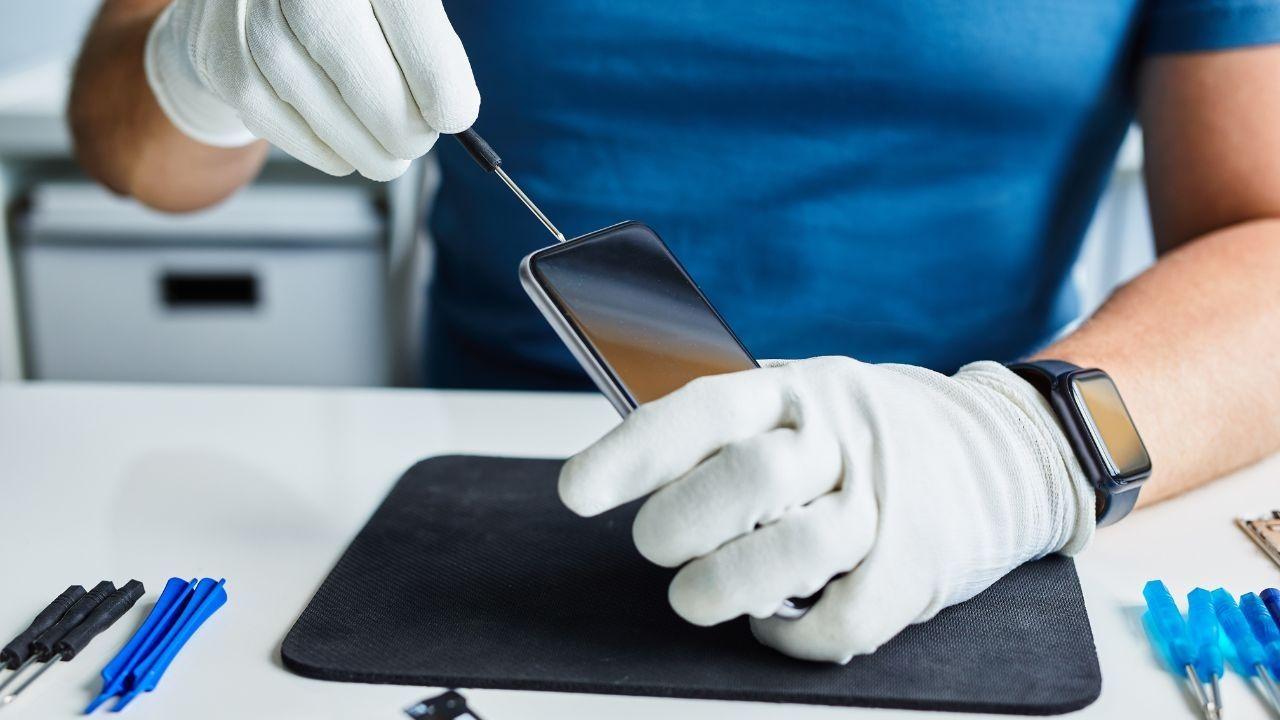
Studies, lists, and phones are legendary for how easy they are to fix.
Beyond the manufacturers we've already mentioned, there are historical lists of phones that are particularly easy to open and repair . Many of them aren't exactly new, but they help us understand how smartphone design has evolved.
According to iFixit's assessments, in addition to the Fairphone and the Shift 6M, other notable devices include the Motorola Droid Bionic, Motorola Atrix 4G, LG G5, LG G4, Xiaomi Redmi Note 3, Google Nexus 5, and Samsung Galaxy S4 . Several of these achieved repairability scores of 9 out of 10.
The big "but" is that many belong to previous generations, in some cases phones from 2011, 2013, or 2015, which are already difficult to use as a primary phone today . This reflects a clear trend: as design progressed toward bezel-less screens, thinner bodies, and water resistance, ease of repair was sacrificed.
Studies like the one by Electronics Hub also point to which brands are at the extremes. Asus appears as one of the manufacturers with the easiest devices to repair globally , both in terms of repair time and the ease of the guides, while Sony usually fares worse, with models that are particularly difficult to open and maintain.
On the other hand, it's been observed that the repairability of some Google Pixel phones has worsened over the years , partly contradicting Google's stated commitment to the right to repair. And if we look at the most extreme cases, the Google Pixel 7 stands out as one of the phones that causes the most trouble on the repair bench.
The role of European laws and the right to redress
These changes didn't arise out of thin air; they largely stem from a context in which the European Union is promoting regulations to extend the lifespan of electronic products . One of the most relevant for consumers is the obligation to guarantee repairs for a long period after purchase.
Measures under discussion and/or approval include requirements such as manufacturers maintaining the availability of spare parts for up to 10 years , offering free repairs in the first few years in certain cases, and subsequently providing service even if it is paid for.
Meanwhile, initiatives like the European "right to repair" aim to prevent software-based repairs from being blocked or hindered by absurdly closed designs lacking technical justification . This has prompted major companies like Apple to launch self-repair programs and review their parts matching policies.
In practice, this regulatory framework, coupled with increased environmental awareness and concern about electronic waste , is gradually changing how smartphones are designed and sold. It's not an immediate revolution, but it is a shift that is beginning to be noticeable.
Repairability, environment and wallet: why being able to open your phone matters so much
Choosing a phone that you can easily repair has far more tangible advantages than it might seem. For starters, a repairable phone tends to last longer because it's feasible to replace the battery when it degrades or when the phone shuts down unexpectedly , replace a broken screen, or upgrade a module without throwing the whole thing away.
That extra lifespan translates into considerable savings in the medium term : instead of recouping the cost in two or three years, you can stretch it out much longer. And if the repairs are simple and the parts are available, you can often do them yourself or in a small local workshop, without having to go through prohibitively expensive official service centers.
The third pillar is environmental impact. Smartphones are a significant part of the 53,6 million tons of electronic waste generated in 2019 , according to United Nations data, of which only 17% was recycled. Every phone we avoid throwing away at the first sign of trouble means less mineral extraction, less energy used to manufacture a new one, and less technological waste.
Brands like Fairphone have demonstrated with data that two additional years of use can reduce CO2 emissions associated with the phone by around 30% . It's not the solution to all environmental problems, but it is a concrete and measurable action that each user can take through their purchasing decisions.
For all these reasons, choosing easily repairable phones and supporting manufacturers who champion the right to repair has become a very direct way to protect both your wallet and the planet, without sacrificing a functional and up-to-date smartphone . As regulations evolve and consumer pressure increases, more brands are likely to follow suit, and repairability will cease to be a rarity and become the norm.
