- Digital equity requires not only access to the Internet, but also affordable devices and the skills to use them independently.
- Digital inequalities reflect and amplify previous gaps in gender, territory, income, age, ethnicity, and disability.
- Well-designed connectivity brings STEM role models and training closer to girls and women, especially in rural areas.
- Public and private programs for infrastructure, training and accessibility are key for technology to generate real equality.

Where you are born, the neighborhood you grow up in, or whether your home is in a big city or a small town have historically determined how far you could go in terms of education, employment, and social participation . The money available in your family, the educational level of your environment, and access to nearby professional role models also significantly influenced your actual possibilities.
If we look back just a few decades, to the heart of the 20th century, almost anyone would have answered "yes, without a doubt" to questions like whether social origin, location, or gender determine opportunities . And as we go further back in time, that statement becomes even more emphatic. Today, the situation is changing thanks to digital connectivity, but the shift is neither automatic nor equitable: it depends on the internet, devices, and digital skills reaching everyone, not just those who already have an advantage.
Connectivity, territory and opportunities: from the rural world to the city
For decades, growing up in a big city meant more schools, more universities, more academies, and, above all, more professional role models nearby . In contrast, growing up in rural areas meant fewer educational opportunities, longer distances to access high schools or colleges, and less exposure to scientific or technological professions.
In the case of women and STEM (science, technology, engineering, and mathematics) careers, the rural disadvantage has been twofold: living far from major urban centers and facing deeply ingrained gender stereotypes . Fewer female role models, fewer specialized teachers, and fewer spaces where science and technology could be seen in action meant fewer girls imagining themselves as engineers, programmers, or researchers.
The expansion of telecommunications networks and digital infrastructure has begun to break down this barrier. Connectivity allows access to advanced training content, online workshops, robotics clubs, and mentoring through a screen , without needing to live in the center of a major city or have a leading institute nearby.
In Spain, connectivity figures are high: over 97% of households have internet access, and around 96% have broadband speeds of at least 100 Mbps, according to ONTSI . This isn't just about being able to work remotely, stream movies, or shop online from anywhere in the world; latency and connection quality are also crucial. Above all, it means a huge door is opening to new educational, professional, and cultural opportunities.
With a click, online educational platforms , virtual labs, digital campuses, hackathons, distance tutoring, and learning communities appear . With a computer and a good internet connection, a teenager from a small village can learn programming, participate in international challenges, or attend talks with leading scientists just as easily as a girl from a central neighborhood in Madrid or Barcelona.
Digital equity: much more than home internet
Digital equity goes beyond simply having an internet connection. It means that every person and every community has the necessary technological, educational, and economic resources to fully participate in society, the economy, and democratic life . It's not just about a router and a device: it includes the skills to use technology effectively and securely, and the real possibility of benefiting from it.
According to the definition popularized by the National Digital Inclusion Alliance, digital equity is a basic condition for access to continuing education, employment opportunities, online health services, civic and cultural participation, and digital public services . When it fails, those who were already disadvantaged fall even further behind.
Two-thirds of the world's population is connected, but 2.700 billion people still lack internet access . This means that one in three people cannot take advantage of the internet's economic, educational, social, political, or health potential. The digital divide both reflects and amplifies pre-existing inequalities in income, gender, age, ethnicity, and place of residence.
When digital equity is lacking, access to information, training, and employment becomes concentrated in the hands of those who already have resources. This reinforces a cycle of disadvantage that limits social mobility, widens the gap between neighborhoods, regions, and countries, and consolidates the exclusion of specific communities from the so-called knowledge society.
Causes of digital inequalities: money, territory, gender and much more
The digital divide does not have a single cause. Various social, economic, cultural, and personal factors intersect and reinforce each other, generating increasingly complex layers of inequality . International research and organizations such as the United Nations and the International Telecommunication Union point to some key elements.
First, there's income level. Higher family incomes mean a greater likelihood of having access to up-to-date devices, fast internet connections, and quality digital services . For families with fewer resources, the cost of a broadband plan or a laptop can be a nearly insurmountable barrier, both within and between countries.
Territory is another decisive factor. People living in urban areas have, on average, much better access to telecommunications infrastructure than those residing in rural areas . Globally, in 2022, 82% of the urban population used the internet, compared to much lower percentages in rural areas. Infrastructure deficiencies drive up prices, reduce service quality, and make many educational or business projects simply unviable.
Employment status also plays a role. Those with jobs typically have greater access to equipment, corporate networks and intranets , and training in digital skills , while the unemployed or those in precarious jobs face additional obstacles. This digital disadvantage ultimately affects their ability to search for work, update their resumes, or take advantage of remote work opportunities.
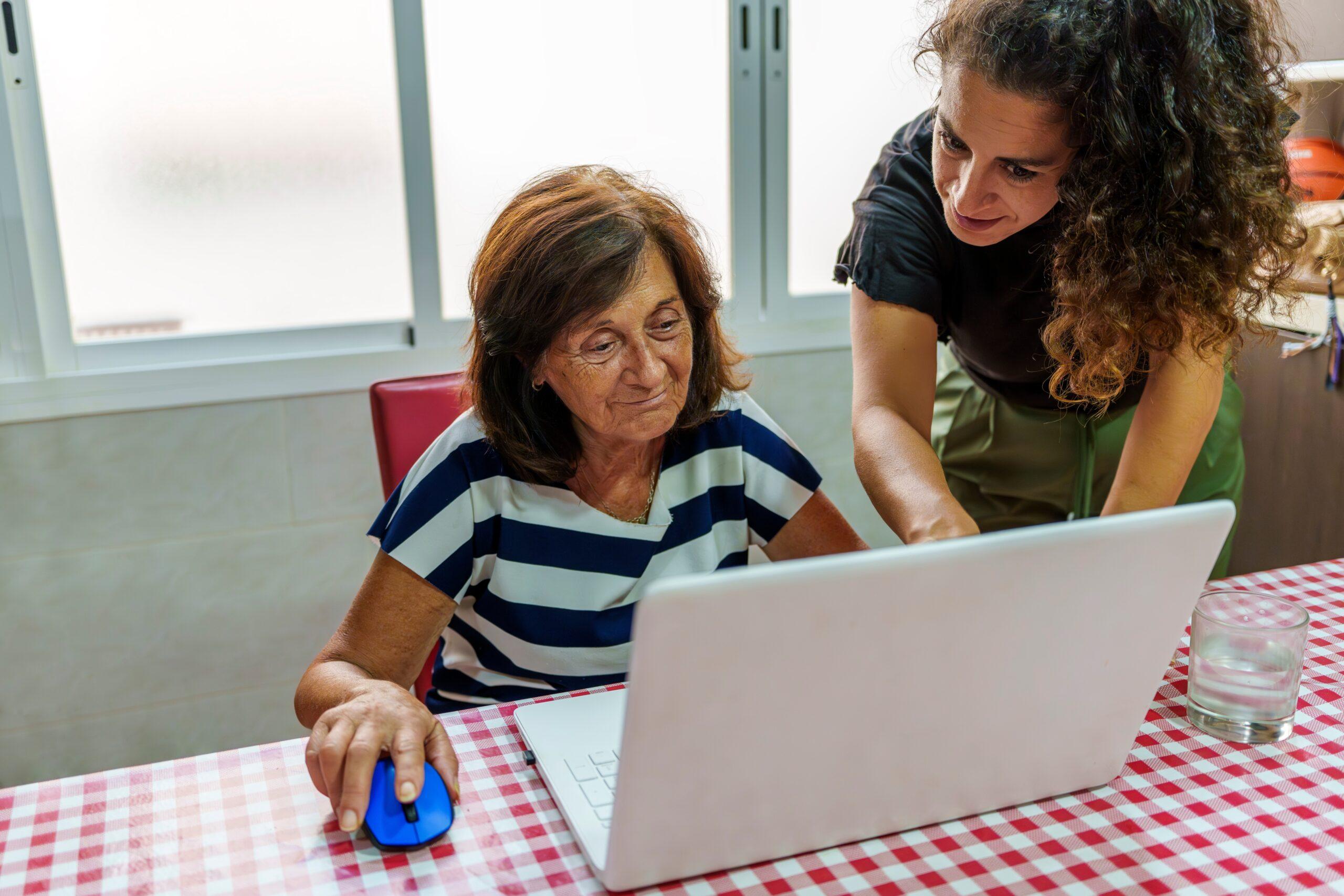
Age plays another key role. Among the older population, internet connectivity rates are significantly lower, and digital literacy is often less developed . There are older people in urban areas who don't even have internet access at home and who need specific support to manage online procedures, banking services, or health apps. That's why projects like "Joining Forces," funded by the Internet Society, combine digital training for older adults and refugees, bringing technology to those who need it most.
Of course, gender continues to make a difference. On average, women use the internet less than men, and the digital gender gap widens dramatically in less developed countries , where the likelihood of being online can be up to 52% lower for a woman. This lack of access has repercussions in all areas: employment, education, entrepreneurship, and political participation.
At the same time, educational levels strongly influence internet use and the development of digital skills. In approximately 40% of countries with available data, less than 40% of the population reports being able to perform even a basic digital task , such as sending an email with an attachment or using a word processor. Programs like the Internet Society Foundation's SCILLS Grants attempt to address this gap by supporting projects that improve digital skills to promote economic inclusion and educational opportunities.
We cannot forget race and ethnicity. In many contexts, racialized or minority communities have less access to devices, connections, and relevant content in their language or adapted to their reality . Even when income and education are taken into account, gaps in internet use and engagement persist. This is compounded by the economic and technological divide between the Global North and the Global South, which exacerbates historical inequalities.
Language also acts as a filter. A large portion of digital content and interfaces are concentrated in a limited number of languages, hindering the online experience for millions of non-native speakers . Initiatives by organizations like Pollicy have shown how language barriers impact online access, usability, and security for those who are not fluent in English.
Finally, disability adds another layer of complexity. When platforms, applications, and websites fail to meet accessibility standards, people with visual, hearing, cognitive, or motor disabilities are either directly excluded or become dependent on others for basic tasks . The lack of inclusive design transforms what could be a tool for independence into a new source of dependency.
Digital divide: who is left out and what is lost
Since the mid-90s, the term "digital divide" has been used to describe the gap between those who can access and effectively use information and communication technologies and those who cannot . The United Nations emphasizes that simply having a device or a temporary internet connection is not enough: stable, affordable, sustainable, and inclusive access is necessary, along with basic digital skills.
Without adequate connectivity, people are systematically excluded from much of the online education, job training, innovation, digital government services, and social participation . It's like living in a neighborhood with no roads or public transportation: the rest of the city moves on, but you're stuck.
The communities most affected by this divide largely coincide with groups already suffering from other forms of inequality. Women and girls, children and young people in vulnerable situations, older people, the rural poor, ethnic minorities or indigenous communities, people with disabilities, refugees, and migrants appear repeatedly in UN reports as the groups most at risk of digital exclusion.
The consequences are noticeable in several dimensions. Educational differences between connected schools and schools without digital resources are reinforced , options for finding quality employment are narrowed, and access to reliable health information or essential procedures such as applying for public assistance or renewing documents becomes more difficult.
In economic terms, the loss is enormous. A study by the Alliance for Affordable Internet estimates that countries have lost around one trillion dollars in GDP due to the exclusion of women from the digital world . Failing to include half the population in technological networks is not only unfair; it is a strategic development error.
Women, STEM and role models: the importance of seeing someone like you
In the fields of science and technology, gender inequalities are particularly evident. UNESCO estimates that women represent around 35% of STEM graduates worldwide , a proportion similar to that recorded by Eurostat in the European Union. Despite numerous efforts, their presence remains a minority.
In addition to material barriers, stereotypes and gender socialization come into play. As they grow up, many girls lose interest in science and technology fields, partly because they don't see themselves in those roles . The lack of role models, the idea that "that's for boys," or a loss of confidence in their own abilities leads them to dismiss these options too soon.
The history of science hasn't made it easy either. Numerous female researchers and technologists have had their contributions made invisible or relegated to the background simply for being women . This symbolic erasure fuels the perception that major technological advances are almost always the work of men.
However, there are plenty of examples that debunk this myth. Hedy Lamarr, the famous Hollywood actress, co-invented a frequency-hopping system that laid the foundation for technologies like Wi-Fi and Bluetooth . Radia Joy Perlman developed the Spanning Tree Protocol (STP), essential for communication between computers on local area networks and a fundamental pillar for the functioning of the Internet as we know it.
Mary Kenneth Keller, a nun and computer pioneer in the United States, was the first woman to earn a doctorate in computer science in that country and co-developed the BASIC programming language , dedicating her career to promoting the use of computers in education. Ada Lovelace, for her part, devised the first algorithm intended to be processed by a machine in the 19th century, which is why she is considered the first programmer in history.
Recovering and promoting these figures is key, but so is presenting girls with current, diverse, and relatable role models in terms of social background, ethnicity, culture, or accent . Seeing an engineer who shares their background, town, or neighborhood has a far greater impact than any generic campaign.
Platforms and projects that use technology to create equality
In recent years, initiatives have emerged that leverage connectivity to reduce the gap in role models and access. Inspiring Girls International, for example, has created a Video Hub that functions as a large audiovisual platform for female role models aimed at girls worldwide.
Through brief interviews, young women can hear about the experiences of women working in diverse fields: from interns to CEOs, prime ministers, oceanographers, and biotechnologists . All of this is available online, free of charge, and accessible from anywhere with a decent internet connection. Telefónica collaborated on the launch of this platform, which aligns with its commitment to more inclusive digitalization.
During the presentation, its president, José María Álvarez-Pallete, stressed that breaking gender stereotypes that reduce the aspirations of girls requires a joint effort from the whole of society and that the Video Hub is an example of how technology can connect people to address very specific problems, such as the lack of diverse role models for young girls.
Miriam González Durántez, founder of Inspiring Girls, highlighted another key aspect: with just a few clicks, any girl can listen to inspiring stories of professional women, raising her aspirations and broadening her horizons . Here, connectivity ceases to be a luxury and becomes a tool for personal and collective transformation.
Meanwhile, projects like 42 Madrid, a programming campus supported by Telefónica, aim to create open and dynamic ecosystems that serve as a platform for female talent in the technology sector . Its methodology, based on peer learning, collaborative work, and gamification, seeks to break down barriers to entry and offer a space where anyone, regardless of their background, can develop advanced digital skills.
The data from 42 Madrid is illustrative: the number of registered participants is approaching 20.000, and around 36% are women . Although parity has not yet been achieved, the figure shows that when more inclusive and accessible environments are designed, women's interest in technology is evident.
Actions to close the digital divide and expand opportunities
Digital equity cannot be achieved on its own: it requires public policies, investment, and collaboration. One of the first levers is expanding broadband infrastructure and improving connectivity in underserved areas , especially in rural areas and low-income neighborhoods. Programs like the Internet Society's "Connecting the Unconnected" are precisely aimed at bringing the internet to communities that are still offline.
Alongside infrastructure, digital literacy programs targeting vulnerable groups, the elderly, people with low levels of education, and marginalized communities are essential . It's not enough to simply install an antenna and distribute tablets: support, training, answers to questions, and adaptation of content to each specific context are crucial. The SCILLS grant program, for example, supports local projects that combine traditional education with ICT to improve learning and teach critical and safe internet use.
Affordability is another key factor. If connection fees or devices remain expensive, lower-income families will be left out, even if technical coverage is available . Initiatives like the BOLT Grants aim precisely to promote innovative, cheaper connectivity solutions adapted to contexts where commercial technologies are unavailable or unsustainable.
Accessibility must permeate all aspects of digital design. Ensuring that websites, apps, and platforms meet international accessibility standards is the only way for people with disabilities to participate on an equal footing . This includes everything from subtitling and audio description to screen reader-friendly interfaces and alternatives for those who cannot use a traditional mouse.
Furthermore, collaboration between public administrations, technology companies, social organizations, and local communities plays a key role. Public-private partnerships allow for the combination of funding, technical expertise, and territorial reach , leading to more inclusive and sustainable digitalization projects.
When the gap widens in rural areas: women and connectivity
In rural Spain, the digital divide has its own characteristics. Although 9 out of 10 households in Spain have fixed broadband networks of at least 100 Mbps, in rural areas the figure drops to 7 out of 10 , leaving a significant portion of the population at a clear disadvantage.
This lack of infrastructure translates into fewer opportunities for economic development, poorer access to digital public services, and greater difficulty in daily life . And within this context, rural women bear an additional burden: many lack adequate devices or, if they do, lack the necessary knowledge to use them effectively.
Seemingly simple actions like submitting a resume, downloading an employment history, or applying for assistance online can become veritable barriers . The consequence is discrimination in access to benefits, training, and employment, which exacerbates depopulation and precarious employment for women in rural areas.
To specifically address this reality, the Federation of Women and Families in Rural Areas (AMFAR) has launched the “CONECTA-T” program. Its objective is to reduce the digital divide among rural Spanish women through a virtual space that combines assessment, training, and information , accessible from its website.
The program offers, on the one hand, a free test so that each user can determine their level of digital skills and discover their profile . From there, it provides direct access to free courses on basic and advanced digital skills, as well as practical information resources for female entrepreneurs considering starting a business remotely.
“CONECTA-T” also serves as a gateway to aid and services such as the Digital Kit and other tools for businesses and individuals. Behind the project is the “Reducing the Digital Divide in Rural Areas: Rural Women Connect-T” program, funded by the Ministry of Social Rights , which reinforces the role of public funding for these initiatives.
In parallel, organizations like the "la Caixa" Foundation are promoting digital literacy workshops for older adults and vulnerable groups , providing them with new tools that facilitate both their return to work and their independence in everyday tasks. In this approach, closing the digital divide is explicitly understood as opening new opportunities for social equality.
A country connected with more women in the digital future
In a country like Spain, which aspires to be a technological leader, it makes no sense to allow the digital divide and gender stereotypes to continue limiting available talent . The European Commission estimates that by 2021, nearly 45% of jobs will be related to the digital environment, but women make up less than 30% of the approximately 7 million people working in the ICT sector in Europe.
At the same time, the OECD has pointed out that Spain faces a demand for millions of professionals with knowledge in science, technology, and mathematics . The mismatch between labor market needs and the presence of women in these fields shows enormous room for improvement.
For a developed and modern economy, attracting female talent to the digital economy and new technologies is not just a matter of social justice, but a strategic imperative . It's not about starting the fight for equality with each new technological wave, but about building a solid foundation for equal participation now.
Connectivity, when combined with inclusive education policies, role model programs, accessible training, and economic support measures, can become a powerful ally in removing invisible barriers such as where you live, your socioeconomic status, or your gender . From girls discovering robotics in a small town to seniors learning to complete online procedures, technology can open doors that were once slammed shut.
Much remains to be done, from continuing to expand broadband access to ensuring affordable prices, guaranteeing accessibility, and increasing training programs. But examples like platforms such as Inspiring Girls, programs like “CONECTA-T,” campuses like 42 Madrid, and community digital literacy initiatives show a clear path forward: when connectivity is geared towards equity, it ceases to be a mere technological advancement and becomes a real tool for equal opportunities.
