- Master everything from basic crafting of wood, stone and minerals to advanced tools, weapons and armor.
- Take advantage of decorative, End, Nether, and ocean blocks to build unique and functional structures.
- Use transportation, mechanisms, and redstone to automate tasks, move resources, and create complex systems.
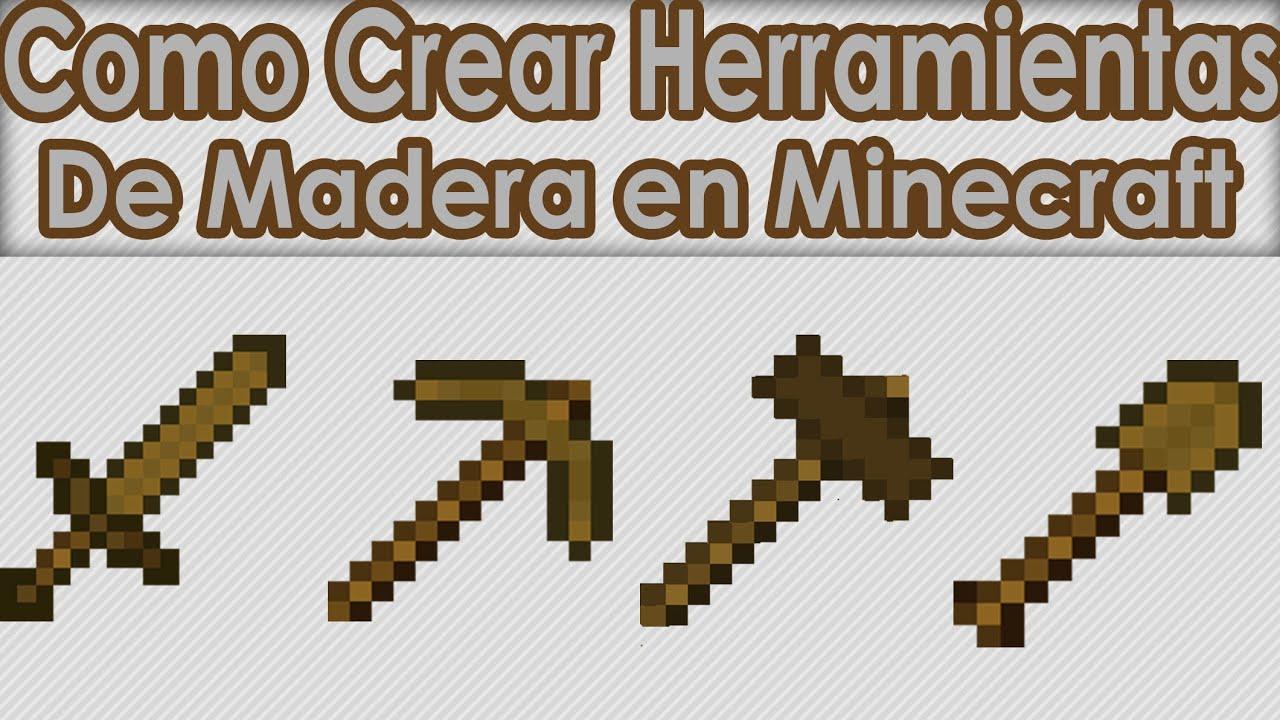
If you've ever wondered exactly what crafting tools are in Minecraft and how to get the most out of them, you've come to the right place. Minecraft isn't just about randomly placing blocks: behind every item, weapon, decorative block, or mechanism lies a recipe, a logic behind it, and a wealth of possibilities for building everything from a basic house to truly insane feats of engineering.
Although the game now includes an integrated recipe book and a resource guide that teaches you many combinations as you gather materials, some crafting recipes still don't appear until you obtain certain items or perform specific actions. This means many players miss out on important recipes. Here's a comprehensive guide, in Spanish (Spain), to help you understand and fully utilize Minecraft's crafting tools: from the very basics to advanced building blocks and redstone.
What are crafting tools in Minecraft and why are they so important?
When we talk about crafting tools in Minecraft, we're not just referring to pickaxes, shovels, or axes. We're also talking about the crafting table, the furnace, the anvil, the smithing table, and the entire set of recipes and blocks that allow you to transform raw materials into useful, decorative, or redstone objects. Without a good understanding of this system, the game remains very limited.
Initially, Minecraft was famous for being a game where mining and crafting were the core elements . Although today it's a social phenomenon with servers, minigames, and countless stories, the heart of the game remains the same: gathering resources, combining them correctly at the crafting table, and crafting what you need to survive, explore, and build. Mastering these crafting techniques transforms a hostile world into a vast playground.
In addition to the standard recipe system, there are blocks and items obtained by smelting materials in furnaces , upgrading equipment at smithing tables, combining ores into compact blocks, and generally maximizing the use of every resource. Therefore, while the recipe book is helpful, a comprehensive guide like this allows you to get ahead and better plan your game.
First steps: wood, workbench and basic survival
In any new world, the first thing you should do is gather wood from the first tree you see. It doesn't matter what kind (oak, spruce, birch, jungle, acacia, dark oak, or the current overworld variants): they'll all be useful for starting your crafting chain. From those logs, you'll turn the wood into planks, and with those, into practically everything basic.
Placing a log in your inventory transforms it into planks. With planks in hand, you can begin crafting the first key items to establish a foundation for your progress. Without these initial steps, the nights will be a nightmare of zombies, skeletons, and creepers.
The first item you need to craft is the crafting table . To do this, you only need four planks of any type of wood placed in a 2x2 square in your inventory. When you place it on the ground, you'll have a 3x3 grid where you can craft the rest of the game's advanced recipes, from stone tools to enchanting tables.
Another essential step is crafting wooden poles . With two planks, one on top of the other at the crafting table or in your inventory, you obtain poles, which serve as the base for tools, weapons, torches, ladders, fences, signs, and a very long list of other items. You'll be using poles constantly, so it's a good idea to craft a few at once.
To light your shelter and the surrounding area, you'll need torches . These are made with a stick and a piece of coal (or charcoal) placed on top. They're essential for seeing at night, preventing enemies from spawning nearby, and exploring caves more safely. Later on, you'll also use the redstone torch variant for circuits.
Finally, to start managing your resources, it's a good idea to craft a chest . Using eight planks arranged in a square, leaving the center empty, you'll get a chest with 27 storage slots. If you place two regular chests side by side, you'll get a double chest, with increased capacity, ideal for your main base.
Basic tools: pickaxe, axe, shovel, and first equipment recipes
With the workbench set up and the initial materials secured, it's time to create the basic mining and gathering tools . These tools come in different versions depending on the material (wood, stone, iron, gold, diamond, netherite, etc.), which affects their speed and durability.
The pickaxe is the essential tool for mining minerals and many stone blocks. The classic recipe consists of 3 units of the material (for example, planks, stone, or iron ingots) placed in the top row of the crafting table and 2 sticks vertically in the center. With it, you can obtain iron, coal, gold, diamond, redstone, lapis lazuli, and other essential minerals.
The axe is crafted by combining 3 blocks of the main material and 2 sticks. The pattern is similar to that of the pickaxe, but with an "L" shape of material on one side. This tool is designed for chopping down trees, collecting planks more quickly, and efficiently breaking wooden blocks like chests or bookshelves. It can also serve as a melee weapon with considerable damage in some versions.
The shovel is much simpler: you need one block of material (wood, stone, iron, diamond, etc.) and two sticks. The material goes on top of a column, and the sticks go underneath. It's designed for digging dirt, sand, gravel, clay, or snow at high speed, especially when you're starting to level land or prepare farms.
In addition to these key tools, it's a good idea to craft your first chests and beds . Eight planks make a chest, and three planks and three wools of the same color (wool is obtained by killing sheep or shearing them with shears) make a bed. Sleeping in a bed allows you to spend the night and establish a respawn point if you die, which is essential for survival.
Once you start accumulating minerals, you should create a furnace using eight stone blocks arranged in a ring, leaving the center empty. The furnace is used to smelt iron and gold, cook food, transform sand into glass, clay into bricks, and many other related recipes. From then on, your tools and equipment will improve with each new metal you obtain.
Weapons and armor: from leather to netherite
Once you have your base and basic tools, the next logical step is to craft weapons and armor to better survive your enemies. The sword, bow, crossbow, or fishing rod, along with armor made of different materials, will make the difference between living and falling to the first group of mobs.
The sword is crafted with one stick and two units of the chosen material (wood, stone, iron, gold, diamond, or netherite). The stick is placed in the center of the crafting table, and the two materials are stacked on top. Swords can be made from all types of wood found in the Overworld, as well as stone, deep slate, blackstone, iron, gold, and diamond. The netherite sword is not crafted directly at the crafting table, but rather by upgrading a diamond sword at the smithing table using a netherite ingot.
To craft arrows, you need a flint, a shaft, and a feather. They are usually arranged vertically: flint on top, shaft in the middle, and feather at the bottom. This recipe yields several regular arrows. There are also spectral arrows, which are made by combining arrows with glow powder, and arrows with special effects if you use potions , though these recipes are not made at the standard crafting table but at the arrow-making station.
The bow and crossbow are the primary ranged weapons. The bow is crafted using three sticks and three strings (obtained from spider silk), following a curved pattern. The crossbow requires sticks, string, a hook, and an iron ingot, resulting in a weapon that is slower to reload but powerful and accurate. The trident is another very powerful ranged/melee weapon, but it cannot be crafted in vanilla Minecraft; it is obtained from drowned people who drop it with a certain probability.
As for armor , the crafting structure is the same for all base materials. Leather armor is made with cowhide; iron armor with iron ingots; gold armor with gold ingots; and diamond armor with diamonds. Netherite armor is also not crafted at the crafting table, but rather by upgrading diamond pieces at the blacksmith's table using netherite ingots.
The helmet uses 5 units of the material, placed in the top row and the two corners of the middle row. The breastplate requires 8 units, leaving only the center space of the top row free. The trousers use 7 units in an inverted "U" shape, and the boots use 4 units placed in the two bottom corners of the grid. Additionally, you can craft a shield from wood and iron ingots, and a turtle shell from turtle scales, which provides special effects when swimming or breathing underwater.
Advanced tools, watches, compasses, and other essential supplies
Beyond pickaxes, shovels, and axes, Minecraft offers a good number of useful tools and items for exploring, navigating, and managing your resources. Many are crafted with simple combinations of sticks, ingots, and special minerals like redstone dust.
The hoe is crafted with two sticks and two units of material (wood, stone, iron, gold, diamond, or netherite), and is used to till the soil and turn it into farmland. It is the key tool for creating farms for wheat, carrots, potatoes, and other crops. The crafting patterns are similar to those of other tools, but with only two materials in the top horizontal row.
The clock is crafted with 4 gold ingots and a redstone dust in the center. It indicates the passage of day and night, very useful when exploring caves without seeing the sky. The compass , on the other hand, is made with 4 iron ingots and a redstone dust in the center, pointing to the original world spawn point, or to a lodestone if synchronized with one.
The fishing rod is crafted with 3 sticks and 2 strings, placed diagonally and vertically respectively, and allows you to obtain food (fish) and special items from the water. There is also the carrot rod, which combines a regular fishing rod with a carrot and is used to steer saddled pigs. An equivalent in the Nether is the warped mushroom rod, used to control lava-walkers.
The flint and steel is crafted with flint and iron ingots and is essential for lighting Nether portals or TNT. Shears are created with two iron ingots placed diagonally and allow you to shear sheep for wool without killing them, as well as gather leaves, cobwebs, and other delicate blocks. The cauldron is crafted with seven iron ingots arranged in a U-shape and is used to store water, potions, and, in Bedrock, even to dye leather armor.
Other important items include the map , which requires a compass surrounded by eight sheets of paper, and the spyglass, crafted from amethyst fragments and copper ingots. All of these elements facilitate exploration, navigation, and basic world management.
Transport and mechanisms: rails, wagons and pistons
One of the most fun aspects of crafting in Minecraft is everything related to transportation and mechanisms . Thanks to rails, minecarts, and pistons, you can build train lines, item transport systems, or automatic hidden doors.
Basic minecarts are crafted with 5 iron ingots placed in a "U" shape on the crafting table. From the basic minecart, you can create variants: a furnace minecart (motorized minecart) by combining a regular minecart with a furnace; a chest minecart for transporting resources; a hopper minecart for automatically collecting items; and a TNT minecart for mounting mobile explosives.
Standard rails are crafted with 6 iron ingots and 1 stick, placed with the stick in the center and the iron ingots on either side. This recipe yields a set of 16 rails. Booster rails use gold ingots, a stick, and redstone dust, while detector rails combine ingots with a pressure plate and redstone, and trigger rails use sticks, ingots, and redstone torches.
The boat is another basic means of transportation. It's made with five planks of any wood from the Overworld, arranged in a U-shape. Each type of wood (oak, spruce, birch, jungle, acacia, dark oak, etc.) results in a boat with a color that matches the wood. Nether woods, however, cannot be used to make boats, so you won't be able to have boats in crimson or distorted colors.
Pistons are crafted with 3 planks , 4 cobblestone blocks, 1 iron ingot, and 1 redstone dust. A sticky piston is created by adding a slime ball to a regular piston. With these blocks, you can create secret doors, elevators, flying machines, and many other mechanisms when combined with redstone, repeaters, and observers.
This category of mechanisms also includes objects like trapdoors (with 6 planks), pressure plates (2 planks or stone), rope hooks, levers made with sticks and rocks, and the dartboard that interacts with arrows. Anything that involves activating, detecting, or moving blocks ends up becoming part of the ecosystem of advanced crafting tools.
Basic blocks and crafting: stone, minerals and variants
Beyond the equipment, many of the creation tools focus on transforming basic blocks into decorative variations . Stone, granite, andesite, diorite, deep slate, black stone, and bricks have multiple versions in the form of stairs, slabs, walls, and polished or chiseled blocks.
Starting with cobblestone smelted in the furnace, or blocks like deep rock slate and blackstone, stairs and slabs can be crafted from all these variations. Stairs are available in polished diorite, stone, polished deep slate, polished andesite, polished granite, plain granite, deep rock slate, andesite, stone, and diorite, among others. Each type is crafted using six blocks arranged in a stair-like pattern to create multiple units at once.
You can also craft stone bricks , deep slate bricks, mossy stone bricks, and their respective walls, stairs, and slabs. Many of these blocks have mossy versions, which are obtained by combining stone or bricks with vines or moss blocks. Visually, mossy bricks made with moss or vines look the same, giving you flexibility depending on what you have readily available.
In the case of blackstone , there are polished blackstone blocks, stairs, slabs, and polished blackstone bricks, all intended for darker or Nether-themed constructions. In addition, there are walls made of rocky deep slate, granite, andesite, blackstone, stone bricks, rock, polished blackstone, polished blackstone bricks, diorite, and polished deep slate, greatly expanding the possibilities for decoration and fortification, and with mods available for building.
A handful of minerals, such as coal, lapis lazuli, gold, emerald, diamond, netherite, iron, or amethyst , allow you to create compact blocks by placing nine units of the mineral on the crafting table. These blocks are primarily used for compact storage or decoration, and can be broken down back into their original nine minerals by placing them back on the crafting table.
With the arrival of copper and raw ores, raw iron, raw copper, and raw gold blocks have also been added, which can likewise be converted back into their original pieces at the crafting table. In other words, these blocks act as inventory "compressors," which is especially useful if you're doing long mining runs or playing without shulkers.
Glass, sand, clay, cement, and concrete
Sand and clay can be used to create a wide variety of decorative blocks. Melting sand in a furnace produces glass, which can be used to make glass panels, colored blocks, lighthouses, and other light blocks. Clay, on the other hand, serves as the base for bricks and terracotta.
With standard glass, you can create undyed glass panes and then dye them with any of the available dyes, as well as glass blocks of all colors. There is also an opaque type of glass and End glass, used in End structures and some special crafting recipes. Glass is also used to craft glass bottles, sunlight sensors, and blocks needed for the beacon, which channels effects on the player.
As for clay , you first place the clay block in the kiln to obtain hardened clay or bricks, depending on the recipe. These bricks can be used to craft flower pots , brick blocks, brick stairs, brick slabs, and brick walls. Terracotta can be dyed almost any color and generates naturally in the plateau biome, though crafting it allows you to use the exact shade you want.
Cement and concrete add another powerful decorative layer. Cement is crafted by mixing sand, gravel, and dye. Once you have the cement block, to transform it into concrete, you must place it on the ground and pour water over it with a bucket, or expose it to running water. The block will change texture and become solid concrete, one of the cleanest and most uniformly colored materials for modern construction.
All these variants are complemented by other special blocks, such as the End glass, the beacon, or the sunlight sensor, which take advantage of both glass and redstone dust and other minerals to add functionality as well as aesthetics to your constructions.
End blocks, Nether blocks, prismarine, and special materials
Special biomes like the End, ocean temples, and the Nether provide unique blocks and crafting recipes that further expand the available crafting tools. Many of these combine elements found only in these dimensions.
In the End, coro plants yield coro fruit . Baking these fruits in a furnace produces baked coro fruit, which is used to create purple blocks. From these blocks, you can craft purple slabs, purple stairs, and purple pillars, all commonly used in buildings inspired by End cities.
Endstone is crafted into Endstone bricks using standard crafting methods. These bricks can be used to create Endstone stairs, slabs, and walls, fitting perfectly into Endstone structures or custom alien-style fortresses.
Ocean temples yield prismarine fragments and crystals . These can be used to craft blocks such as the ocean lantern, prismarine bricks, regular prismarine, and dark prismarine, as well as their corresponding stairs, slabs, and walls. These blocks emit light or have dynamic textures that fit perfectly into underwater bases or aquatic structures.
The Nether contains even more variations: Nether wart blocks, regular Nether bricks, cracked Nether bricks, red Nether bricks, Nether brick stairs and slabs, walls and fences made from these materials, and even chiseled Nether bricks. Many are obtained by smelting netherrack or combining Nether wart with other resources, resulting in a very distinctive reddish palette.
As for ice, it can only be collected in blocks using a tool with Silk Touch . Breaking it by hand or with tools without that enchantment will not return the block. Nine ice blocks can be used to create a compacted ice block, and nine compacted ice blocks yield blue ice, which has special properties that affect the movement of entities and minecarts.
Wool, beds, rugs, paintings, flags and other decorative items
Wool is much more than just a material for bedding. You can obtain wool by shearing sheep with scissors or crafting it from 4 spider silk at a crafting table. Any wool can be dyed with any dye to obtain wool of that color, opening up a huge range of possibilities for interior decoration and pixel art.
With 3 planks of any wood and 3 wool blocks of the same color, you can craft a bed . The basic recipe uses white wool, but you can easily substitute it with red, blue, green, etc., wool to create beds of different colors. Rugs are made with 2 wool blocks (of the same color or a combination of colors) and are placed as a thin layer on the floor, perfect for adding details without changing the base block.
The paintings are crafted with 8 sticks surrounding a block of wool, either white or another color. The color of the wool does not affect the resulting image, which is chosen randomly from several designs. The flags , on the other hand, are made with 6 wool and 1 stick. The color of the wool determines the base color of the flag, which can then be customized with patterns on the loom.
This whole family of decorative blocks allows you to personalize your home: floors covered in rugs, walls adorned with paintings, banners bearing your clan's emblem, and combinations of colorful wool for sofas, curtains, or anything else you can imagine. They are purely aesthetic creative tools, but essential for making your world feel truly yours.
Wood, logs, chests, furniture and functional tables
Wood and its derivatives are another fundamental crafting material in Minecraft. From logs and planks, you can obtain virtually all the game's "furniture" and a huge number of decorative blocks.
Crafting with logs (including Nether logs) allows you to create blocks with all faces the same, with or without bark, intended for decoration. In addition to sticks, which we've already seen, you can craft pressure plates and buttons in all wood color variations, adding aesthetic consistency to your mechanisms.
Planks are used to make bowls, chests, crafting tables, trapdoors, doors, and stairs of all wood types. They are also used to craft bookshelves (essential for upgrading enchanting tables), barrels, jukeboxes, cartography tables, smithing tables, lecterns, arrow tables, looms, and beehives. Each of these blocks adds a specific function: enchanting, storing, playing music, managing maps, upgrading tools, or housing bees.
Sticks are also used to craft fences and gates of all types of wood, which serve both as decoration and to keep animals and villagers safe. They can also be used to craft armor racks, signs, rails, booster rails, activation rails, ladders, campfires, soul bonfires, and item frames, among other things.
All these elements transform a simple wooden cabin into a fully equipped house, with organized storage, work areas, decoration, redstone systems, and even automated farms integrated into the environment.
Redstone and interactive blocks: the technical side of creation
Redstone is the "electricity" of Minecraft and one of the most powerful crafting tools in the game. With redstone dust, repeaters, comparators, pistons, observers, and various input/output blocks, you can design logic circuits, clocks, automated farms, and all sorts of complex machines.
Redstone dust is obtained by mining redstone ore with a suitable pickaxe and is used to create redstone torches , redstone blocks, repeaters, comparators, and redstone lamps, among other things. A redstone torch acts as a signal source, while a redstone block serves as both a storage medium and a constant signal source.
Redstone repeaters are crafted from smooth rock, redstone torches, and redstone dust, and allow you to amplify the signal and control delays. Comparators, constructed from smooth rock, redstone torches, and Nether quartz, are key for detecting the states of tanks, chests, and other blocks, enabling item sorting systems and automated storage.
Other related interactive blocks include the dispenser and dropper, which throw or drop items; the music block, which plays notes depending on the block beneath it; the redstone lamp, which emits light when it receives a signal; the dartboard, which responds to arrow impacts; and the observer, capable of detecting changes in adjacent blocks. All of this is combined with input mechanisms such as levers, buttons, pressure plates made of wood, stone, burnished blackstone, gold, or iron, doors and trapdoors (made of wood or iron), rope hooks, trap chests, sunlight sensors, and lightning rods.
Using these pieces and some imagination, the crafting tools in Minecraft cease to be just recipes for making pickaxes and torches, and become the basic building blocks of farms, automatic doors, defense systems, and real computers within the game.
Given all of the above, it's clear that crafting tools in Minecraft encompass far more than just a few basic recipes: they control your progress, your safety, your ability to build spectacular things, and the automation of almost any task. Knowing how to craft everything from a simple crafting table to complex redstone circuits, as well as decorative blocks, vehicles, weapons, armor, and mechanisms, can completely transform your experience and make each new world a vast canvas on which to bring your wildest ideas to life.