- DOC thermal diagnostics allows verification of catalytic efficiency in diesel engines by measuring EGT temperatures and fuel dosage.
- Infrared thermography in health is a non-invasive tool that detects patterns of hyperthermia and hypothermia to identify injuries and pathologies.
- The integration of Artificial Intelligence and Deep Learning optimizes the accuracy of thermal analysis in both heavy mechanics and predictive medicine.

When we talk about thermal diagnostics, we enter a fascinating field where temperature becomes the primary tool for detecting faults, whether in the heart of a high-powered diesel engine or in the tissues of the human body. Although they may seem like opposite worlds, the logic behind analyzing infrared radiation and heat changes is the same: to look for anomalies that are not visible to the naked eye in order to make accurate decisions.
In this article, we'll break down step by step how the efficiency of a diesel oxidation catalyst is evaluated and how medical thermography is revolutionizing the detection of traumatic injuries and pain monitoring. Get ready, because we're going to analyze everything from exhaust heating strategies to the use of AI to predict thermal comfort and detect vascular pathologies.
DOC Thermal Diagnosis in Diesel Engines
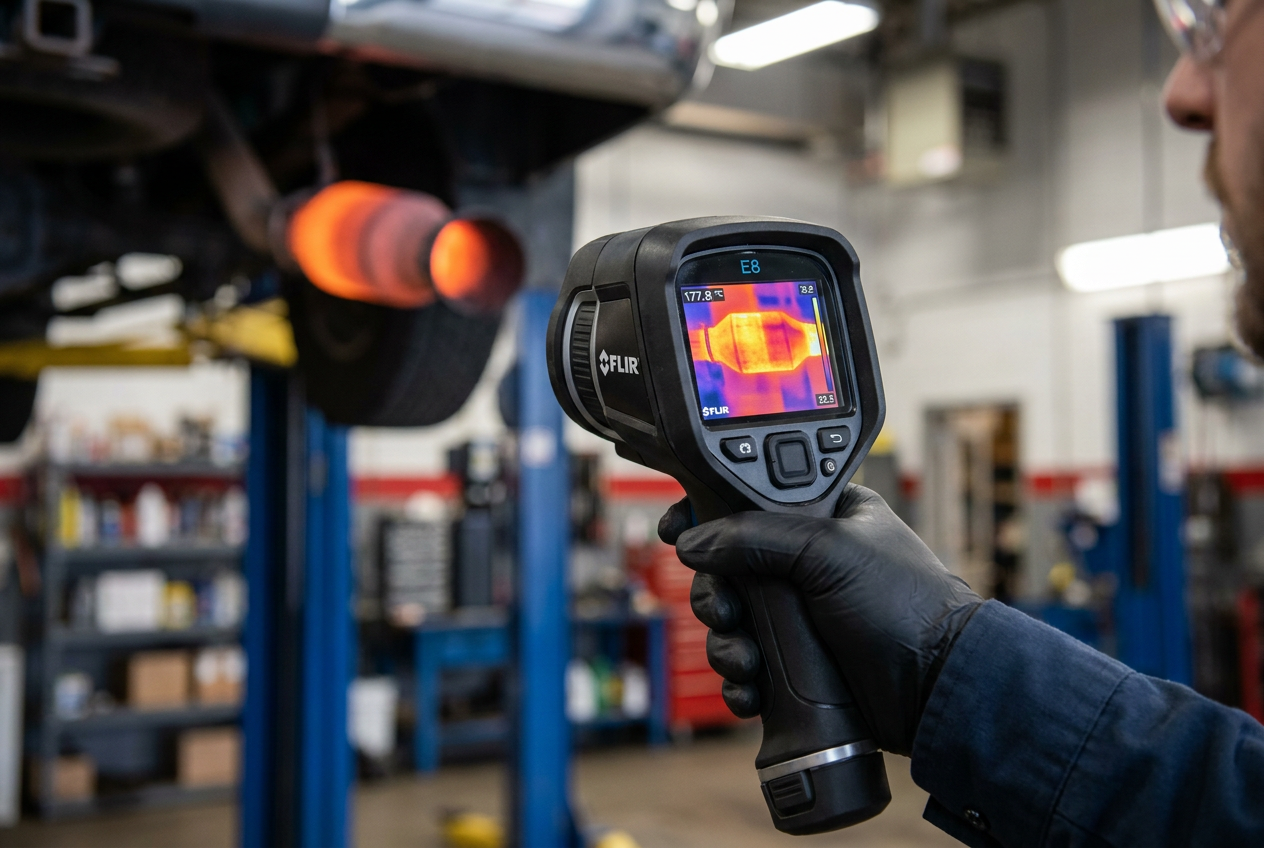
The DOC, or Diesel Oxidation Catalyst, has the critical function of transforming pollutants through chemical reactions. Essentially, it oxidizes carbon monoxide (CO) , hydrocarbons (HC), and the soluble organic fraction (SOF). For this to occur, the gases must pass through a substrate containing precious metals such as platinum or palladium under very specific thermal conditions.
To determine if the DOC is functioning correctly, technicians use thermal diagnostics. This involves monitoring the EGT (exhaust gas temperature) sensors located at the component's inlet and outlet. It's crucial not to rely solely on the scan tool but to confirm the physical location of the sensors , as a reading calculated by the ECM may differ from the actual measurement.
- Exothermic Reaction: During active DPF regeneration, the system doses extra fuel. If the DOC is efficient, it oxidizes these hydrocarbons and releases heat, raising the temperature before the particulate filter.
- Temperature Difference: There is no universal magic value, but the technician must observe how the temperature evolves during the test, relating it to the fuel dosage and the condition of the DPF.
If you're tasked with diagnosing a system like this, don't rush. First, identify the system and any DTCs, verify that the EGT sensors have no wiring faults, and check that the fuel metering is actually reaching the exhaust. Only then should you record the thermal response and compare it to the manufacturer's specifications before deciding to replace the catalytic converter.
Infrared Thermography Applied to Health
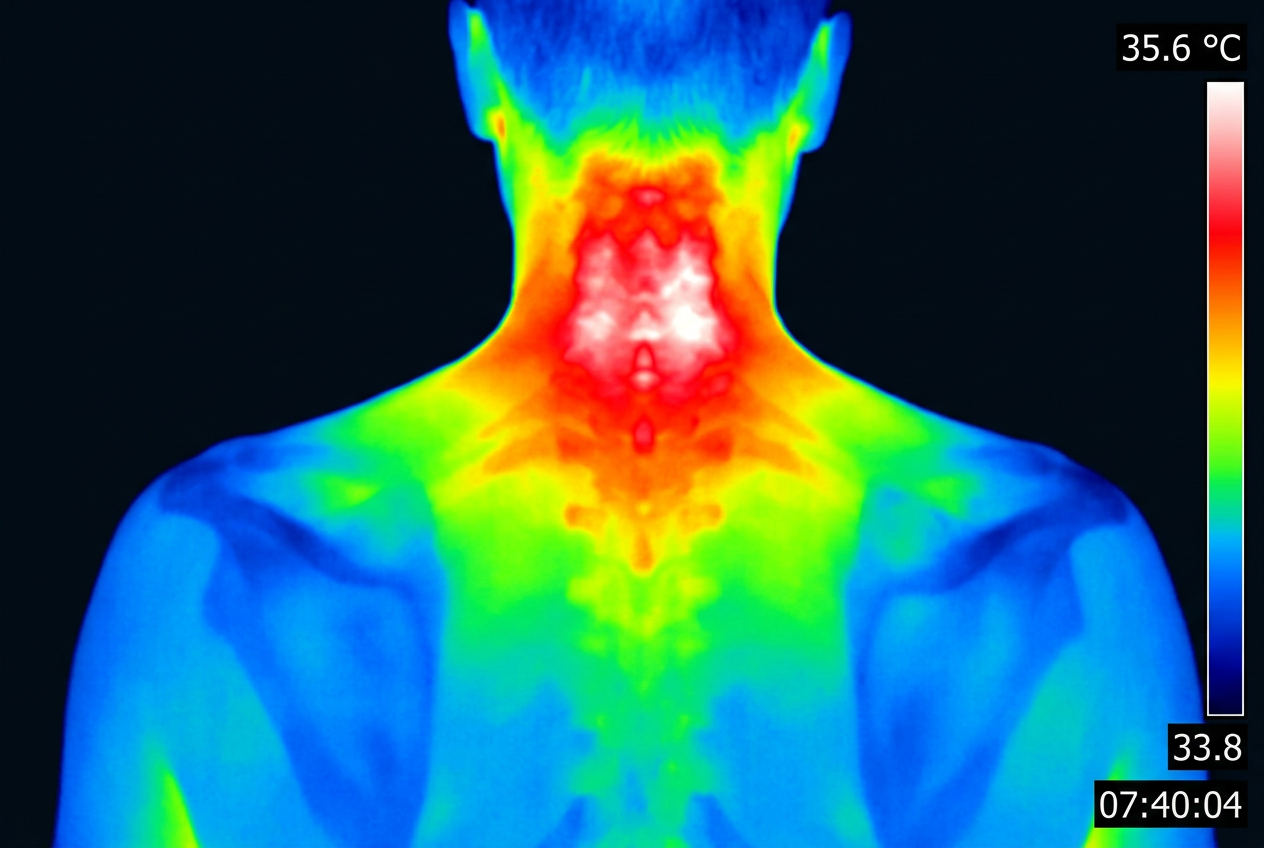
In the medical field, thermography is an extraordinary imaging technique that captures the body's infrared radiation. It is a completely non-invasive test that provides a thermal health profile , helping to locate areas at risk of injury even before the patient notices symptoms. The key lies in the patterns: inflammation typically presents with hyperthermia, while nerve damage, such as sciatica, shows hypothermia.
Use in Traumatology and Pediatrics
In children, thermography is a tremendous asset because it avoids the use of ionizing radiation (X-rays or CT scans). Recent studies demonstrate its effectiveness in screening for fractures, sprains, and contusions . Using decision tree models, extremely high sensitivity has been achieved in distinguishing between injured and healthy children by analyzing the temperature difference between the affected area and the corresponding healthy area.
Referred Pain and Cervical Sprain
One of the biggest challenges in traffic accidents is whiplash, where sometimes MRI scans show nothing, but the patient experiences tremendous pain. Medical infrared thermography (mIRT) allows for the objective assessment of physiological dysfunction by detecting vasodilation caused by the release of substances such as substance P. When combined with ultrasound and the Modified Quebec Pain Score, it creates a powerful pain coherence assessment tool for medical and forensic decisions.
Innovation with Artificial Intelligence and Deep Learning
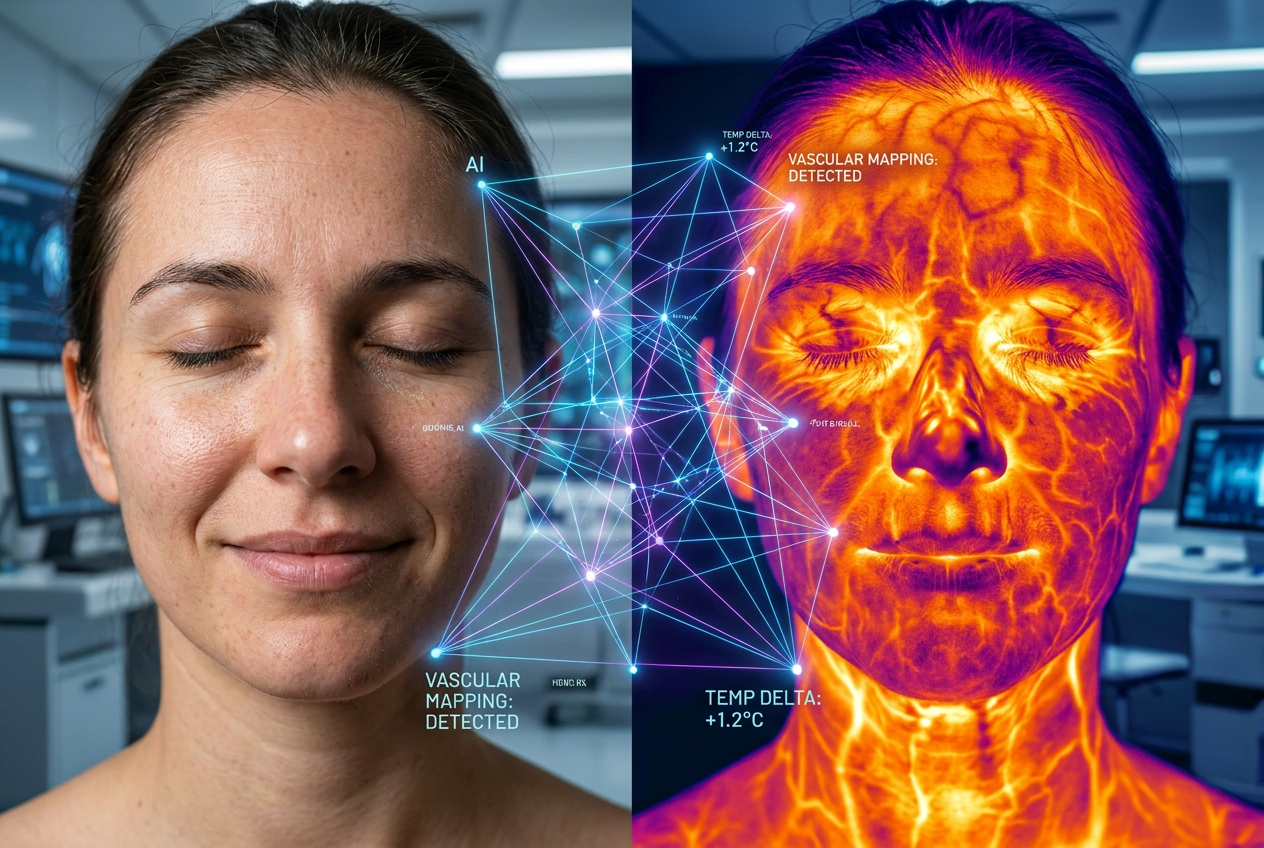
Technology has advanced so much that we no longer just see colors on a screen, but we also use what's called "Deep Thermovision." The Biomechanics Institute (IBV) has trained models with more than 300.000 images to estimate a person's sex, age, and thermotype . This allows for personalized diagnoses and the prediction of thermal discomfort, as well as the detection of varicose veins and facial infections with astonishing accuracy.
Furthermore, tools such as Manual Thermodiagnosis, championed by figures like Dr. Bruno Roche, use detailed body maps to locate internal restrictions without touching the patient. The fusion of RGB and thermal images using neural networks is bridging the gap between subjective observation and objective measurement.
Protocols and Requirements for Reliable Measurement
Whether in an engine or a human body, accuracy depends on the environment. For medical thermography, the room must have controlled humidity and temperature , and the patient must follow strict recommendations 48 hours beforehand (avoiding gels, sprays, or intense exercise). The same applies to mechanics: the efficiency of the DOC cannot be assessed if there are previous injection failures or if the DPF differential pressure sensor is giving erroneous readings.
The ability to monitor evolutionary processes with unlimited repeatability is what makes these techniques so valuable. From detecting muscular dystrophies to optimizing post-treatment processes in heavy-duty trucks, thermography is establishing itself as the fastest and safest way to understand the internal workings of a system without needing to open or intrude upon it.
In both automotive engineering and modern medicine, the analysis of heat flows allows the transformation of invisible data into accurate diagnoses, optimizing everything from the regeneration of a particulate filter to the recovery of a patient with cervical injuries, always relying on the validation of sensors and the support of artificial intelligence.