- The Metroid saga combines exploration, action, and science fiction with a clear chronology divided between the main 2D line and the Prime subseries.
- The main story spans from Metroid/Zero Mission to Metroid Dread, while the Prime games are set between the first title and Metroid II.
- Remakes, spin-offs, and cancelled projects complete an influential universe that has defined the Metroidvania genre and modern speedrunning.
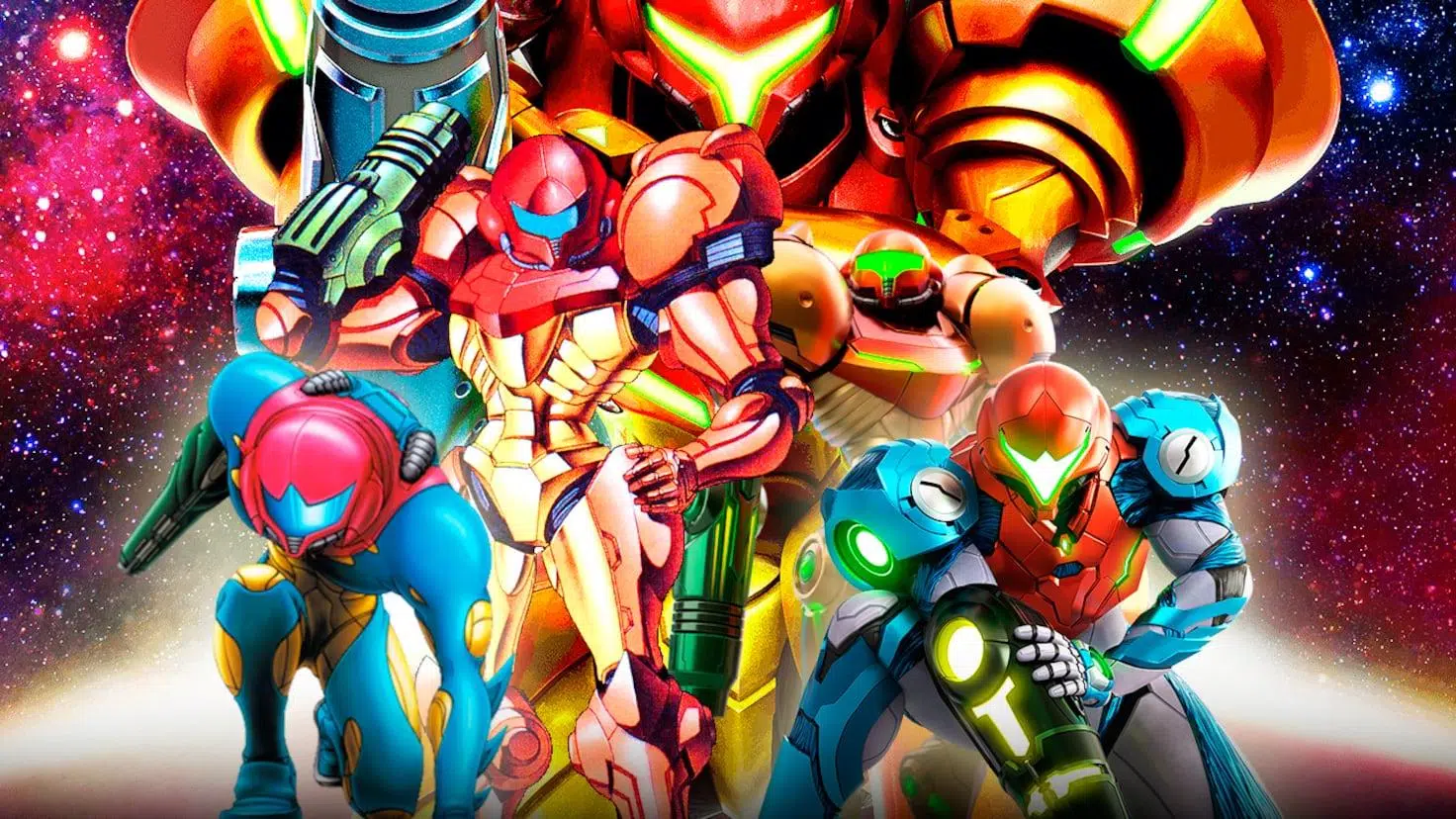
The Metroid saga is one of those series that instantly captivates anyone who tries it: an oppressive atmosphere, meticulous exploration, dense science fiction, and a protagonist, Samus Aran, who has become a true Nintendo icon. While not as prolific as Mario or Zelda, each release carries enormous weight and usually leaves a lasting impression on both critics and players.
The curious thing is that, although Metroid has never been a franchise with dozens of annual releases, its history, chronology, and branches (classic 2D, the first-person Prime trilogy, remakes, spin-offs, and even canceled projects) form a universe larger than it initially appears. If you want to fully understand the order of the saga, what each game contributes, how Metroid Prime 4: Beyond fits in, and even which titles are most worthwhile today, here's a complete and straightforward guide.
What is Metroid and why is it so important?
Metroid was born in the mid-80s at Nintendo, conceived by Makoto Kano and artist Hiroji Kiyotake, under the original direction of Gunpei Yokoi. From the first game on the NES, the series opted for a darker, more solitary, and exploratory tone than other successes of the company, mixing platforming, shooting, and adventure in an interconnected world that opened up as you acquired new abilities.
The franchise's name itself is a contraction of "metro" and "android ," alluding to both the underground settings and the technological, armored appearance of its protagonist. Samus Aran, clad in her Power Suit, quickly became one of the industry's first great heroines, at a time when female protagonists were few and far between.
From 1986 to the present day, the series has appeared on virtually every Nintendo console, from the NES to the Nintendo Switch and Nintendo Switch 2, with one striking peculiarity: it had no main installment on the Nintendo 64. In total, if we include Metroid Prime 4: Beyond, there are around fourteen main titles, plus remakes, compilations, spin-offs, and appearances in other franchises like Super Smash Bros.
In terms of gameplay, Metroid draws inspiration from Mario (precise platforming) and The Legend of Zelda (exploration and skill-based progression), as well as the atmosphere of films like Alien. This combination has been so influential that it gave rise to the term "Metroidvania," used today to describe any game focused on exploring interconnected maps with power-based progression.
The Metroid Universe: Samus, Space Pirates and the Galactic Federation
At the heart of the saga are the missions of Samus Aran , a bounty hunter who usually works for the Galactic Federation. Her recurring objective is to stop the Space Pirates, an aggressive faction that tries to exploit the power of the Metroids, creatures capable of absorbing the life force of other beings until they die.
Samus's story begins on the K-2L colony , where she lived with her parents until the Space Pirate leader, Ridley, devastates the colony and murders almost all of its inhabitants. Samus is the sole survivor and is rescued by the Chozo , an ancient race of humanoid birds with highly advanced technology, who take her to the planet Zebes, infuse her with their DNA to adapt her to extreme environments, and give her her iconic Power Suit.
After years of training with the Chozo and a stint in the Galactic Federation , Samus decides to work as an independent bounty hunter. Although she collaborates closely with the Federation, the relationship isn't always idyllic: her commander, Adam Malkovich, makes extreme decisions that ultimately push Samus to leave the official corps and forge her own path.
The Space Pirates , for their part, are interstellar nomads skilled in looting and weapons technology. When they discover the Metroids on planet SR388, they realize their potential as a biological weapon and begin exploiting them, provoking a reaction from the Federation and setting off a chain of missions that unfolds throughout the storyline.
Amidst this conflict, recurring elements such as Mother Brain, Ridley, and Kraid appear —iconic enemies who return in several installments—as well as new threats like Phazon or Parasite X, which expand the background of this science fiction universe.
How to play Metroid: key mechanics and features
Metroid's gameplay blends shooting, platforming, and exploration in generally labyrinthine environments. The player almost always controls only Samus, with very few allies and virtually no NPCs, which enhances the sense of isolation characteristic of the series.
One of the most iconic mechanics is the Morph Ball , which allows Samus to transform into a sphere and squeeze through narrow tunnels, as well as place bombs to clear paths and uncover secrets. In addition, there are missiles, beams, mobility upgrades like the Space Jump and the Grapple Beam, and different suits that protect against extreme heat, poison, or aquatic environments.
The early 2D games offered side-scrolling gameplay, with free exploration on either side of the map and plenty of backtracking to utilize new abilities in previously visited areas. With the arrival of the Metroid Prime trilogy , the series transitioned to first-person perspective, but retained its core DNA: deliberate exploration, scanners to read terminals, environmental puzzles, and a strong emphasis on unraveling the secrets of each planet.
Another key aspect is speedrunning . Since the first Metroid, games have rewarded players who finish the adventure quickly, unlocking different endings depending on the time taken. Super Metroid, in particular, became one of the most influential titles for the speedrunning community due to its open-world design and the number of sequence tricks it allows.
The series also popularized the typical "countdown" to escape an area before it explodes, something that has become almost a trademark. In the Prime trilogy, however, the alternate endings are linked more to the percentage of items collected than to playtime, rewarding those who explore every corner of the maps.
Metroid Saga Release Schedule
If we look exclusively at official releases, the Metroid release timeline looks something like this, without yet going into the internal order of the story:
- 1986 – Metroid (NES).
- 1991 – Metroid II: Return of Samus (Game Boy).
- 1994 – Super Metroid (SNES).
- 2002 – Metroid Fusion (GBA) and Metroid Prime (GameCube).
- 2004 – Metroid: Zero Mission (GBA) and Metroid Prime 2: Echoes (GameCube).
- 2005 – Metroid Prime Pinball (Nintendo DS).
- 2006 – Metroid Prime Hunters (Nintendo DS).
- 2007 – Metroid Prime 3: Corruption (Wii).
- 2009 – Metroid Prime Trilogy (Wii).
- 2010 – Metroid: Other M (Wii).
- 2016 – Metroid Prime: Federation Force (Nintendo 3DS).
- 2017 – Metroid: Samus Returns (Nintendo 3DS).
- 2021 – Metroid Dread (Nintendo Switch).
- 2023 – Metroid Prime Remastered (Nintendo Switch).
- 2025 – Metroid Prime 4: Beyond (Nintendo Switch and Nintendo Switch 2).
Added to this are re-releases such as Metroid: NES Classics on Game Boy Advance, compilations such as Metroid Prime Trilogy, internal ports within other games (the original Metroid unlockable in Zero Mission or via the GBA-GameCube cable along with Fusion and Prime), and appearances in Super Smash Bros., which have kept interest in the franchise alive.
Official timeline of Metroid history
One of Metroid's advantages over other series like The Legend of Zelda is that Nintendo has been quite clear with its chronology. The internal timeline doesn't coincide with the release order, but it's well-defined and rarely generates arguments among fans.
According to official information (Metroid Fusion promotional DVDs, the Zero Mission website, and subsequent materials), the general timeline is organized as follows:
- Metroid / Metroid: Zero Mission – Samus' first adventure on Zebes and first direct confrontation with the Space Pirates and Mother Brain.
- Metroid Prime and related products – Includes Metroid Prime, Metroid Prime Pinball, Metroid Prime Hunters, Metroid Prime 2: Echoes, Metroid Prime 3: Corruption, Metroid Prime: Federation Force and Metroid Prime 4: Beyond.
- Metroid II: Return of Samus / Metroid: Samus Returns – Metroid extermination mission on SR388.
- Super Metroid – The classic “Metroid 3”, with the famous ending against Mother Brain and the Metroid hatchling.
- Metroid: Other M – Investigation of the Bottle Ship after Super Metroid, with a strong narrative focus on Adam Malkovich and Samus's past.
- Metroid Fusion – Threat of Parasite X and Samus with the fused suit.
- Metroid dread – A direct continuation of Fusion, with Samus facing the EMMI and the truth about her Chozo heritage.
The key is to understand that the Prime saga is inserted between the first Metroid/Zero Mission and Metroid II , forming a kind of large intermediate arc centered on Phazon, Space Pirates and Dark Samus, but without altering the backbone formed by Metroid, Metroid II, Super Metroid, Other M, Fusion and Dread.
Recommended order for playing the Metroid saga
With this chronology in mind, many people wonder what the best order is to play the Metroid games if they want to fully enjoy the story and Samus's character development. The usual approach is to distinguish between two intertwined branches: the main 2D series and the Prime sub-series.
Main 2D storyline (Samus's "central" story)
If you want to focus on the most important narrative arc , the ideal order is to follow this:
- Metroid (NES) / Metroid: Zero Mission (GBA) – Today, Zero Mission is much more accessible: integrated map, more polished controls, and an extra final section that links to the technology seen later.
- Metroid II: Return of Samus (GB) / Metroid: Samus Returns (3DS) – Again, MercurySteam's remake is the best entry point, with modern mechanics like melee counterattacks.
- Super Metroid (SNES) – Considered by many to be the pinnacle of classic Metroidvania design and one of the best games in history.
- Metroid: Other M (Wii) – Highly controversial for its vision of Samus and its narrative, but key if you want to better understand Adam and the transition to Fusion.
- Metroid Fusion (GBA) – A more linear adventure but with a great deal of tension thanks to the presence of the SA-X and the story of Parasite X.
- Metroid Dread (Switch) – It concludes the Parasite X arc and delves deeper into the Chozo heritage, with 2D gameplay fine-tuned to the max.
For those who are big fans of retro gaming or interested in the history of the medium, trying the original NES and Game Boy games still has its charm, although in terms of gameplay they are much harder than their remakes due to the lack of maps, clunkier controls, and a certain repetitiveness.
Metroid Prime subseries (Phazon arc)
The Prime subseries functions as a "branch" that takes place after the events of the first Metroid/Zero Mission. Its internal structure is quite clear:
- Metroid Prime / Metroid Prime Remastered – The leap to 3D that redefined the series; the most recommended version today is the remastered version for Switch.
- Metroid Prime Hunters – A Nintendo DS spin-off focused on battles with other bounty hunters; its plot takes place after the first Prime.
- Metroid Prime Pinball – A “pinballized” recreation of the events of the first Prime, curious but dispensable in terms of plot.
- Metroid Prime 2: Echoes – A darker and more demanding adventure, with light/shadow world mechanics and a harsher tone.
- Metroid Prime 3: Corruption – The closing of the original trilogy, now on Wii, with motion controls and a somewhat more “cinematic” approach.
- Metroid Prime: Federation Force – Cooperative spin-off focused on Federation marines; it provides some background details, but departs from the classic spirit.
- Metroid Prime 4: Beyond – New installment developed by Retro Studios, set after Federation Force and connected to its secret ending scene.
If your goal is to immerse yourself in the story and classic feel of the series, you can skip Prime Pinball and Federation Force without missing anything essential. They're interesting trivia, but not fundamental to understanding the Phazon arc or Dark Samus's role.
All main games, remakes, spin-offs and compilations
In addition to the internal order, it is useful to have at hand an overall view of all the titles related to the saga, ordered more by type than by chronology.
Main 2D Games
- Metroid (1986, NES) – Developed by Nintendo R&D1 and Intelligent Systems; it laid the foundations for the Metroidvania genre.
- Metroid II: Return of Samus (1991, Game Boy) – A more linear adventure, focused on the systematic elimination of Metroids in SR388.
- Super Metroid (1994, SNES) – Third installment, with a masterful design of Zebes and one of the most memorable endings of the saga.
- Metroid Fusion (2002, Game Boy Advance) – Introduces Parasite X, the SA-X, and an Adam Malkovich-based AI with a more guided structure.
- Metroid dread (2021, Nintendo Switch) – The Fusion story continues, featuring EMMI robots, a more powerful Samus, and a very fast pace.
Metroid Prime trilogy and fourth installment
- Metroid Prime (2002, GameCube) – Developed by Retro Studios and Nintendo; transforms 2D exploration into a first-person adventure without losing its essence.
- Metroid Prime 2: Echoes (2004, GameCube) – It maintains the formula but adds duality of worlds and greater difficulty.
- Metroid Prime 3: Corruption (2007, Wii) – Closes the trilogy with motion aiming controls and more presence of other characters.
- Metroid Prime 4: Beyond (2025, Nintendo Switch / Nintendo Switch 2) – New adventure of Samus in Prime style, with a planned release on December 4, 2025 and improved compatibility with the new console.
Spin-offs and partially canonical titles
- Metroid Prime: Hunters (2006, Nintendo DS) – First-person shooter with a strong multiplayer component and new rival bounty hunters.
- Metroid: Other M (2010, Wii) – Developed by Team Ninja and Nintendo SPD; a 2D/3D hybrid focused on Samus's story and traumas, very divisive among fans.
- Metroid Prime: Federation Force (2016, Nintendo 3DS) – Cooperative shooter with Federation marines, without Samus as the main protagonist.
- Metroid Prime Pinball (2005, Nintendo DS) – Pinball game that recreates stages and bosses from the first Metroid Prime.
Remakes, re-releases and compilations
- Metroid Zero Mission (2004, Game Boy Advance) – Remake of the original Metroid with modernized graphics and design, plus new sections.
- Classic NES Series: Metroid (2005, Game Boy Advance) – Faithful port of the NES Metroid within the Classic NES line.
- Metroid: Samus Returns (2017, Nintendo 3DS) – Remake of Metroid II with new mechanics, additional bosses and expanded maps.
- Metroid Prime Remastered (2023, Nintendo Switch) – Visual and control update of the first Prime, now considered the best way to play it.
- Metroid Prime Trilogy (2009, Wii) – Compilation that brings together Prime 1, 2 and 3 with controls adapted to the Wii controller and slight improvements.
Appearances in other sagas
Samus and the Metroid universe also make appearances in other titles, although they are not part of the main storyline :
- Super Smash Bros. (Nintendo 64, 1999).
- Super Smash Bros. Melee (GameCube, 2001).
- Super Smash Bros. Brawl (Wii, 2008).
- Super Smash Bros. for Nintendo 3DS & Wii U (2014).
- Super Smash Bros. Ultimate (Nintendo Switch, 2018).
Cancelled projects and problematic developments
The history of the saga also includes games that were never released or that underwent development restarts. Among the best known are:
- metroid 64 (Nintendo 64) – An early attempt to bring the saga to 3D during the N64 era, which was discarded due to not finding a satisfactory way to translate the experience.
- Metroid Dread (Nintendo DS version) – A project started around 2005 and cancelled years later, which would eventually be reborn as the 2021 Metroid Dread for Switch.
- Metroid Prime 4 (first development) – It started in 2017 under Bandai Namco, but in 2019 Nintendo announced a complete reboot with Retro Studios in charge, which led to the current version, Metroid Prime 4: Beyond.
These ups and downs have contributed to Metroid's image as a carefully crafted but spaced-out saga ; not many games are released, but when they do arrive they usually do so with a very high standard of quality and with a fan base that has accumulated hunger.
Reception, sales and legacy
Commercially, Metroid has never been Nintendo's cash cow, but it is a series with solid sales and enormous prestige . Up until around 2010, estimates suggested approximately 16 million copies sold across all installments, with particularly strong sales in the United States and more modest figures in Japan.
In critical terms, the story is quite different: Super Metroid, the Prime trilogy, Zero Mission, Samus Returns, and Dread frequently appear on lists of the best games of all time , both for their design and their influence. The interconnected map structure, skill-based progression, and clever backtracking have been replicated time and again in indie and AAA games, to the point that "Metroidvania" has practically become its own genre.
Furthermore, the series has helped to popularize practices such as organized speedrunning , with Super Metroid serving as a cornerstone in events like Games Done Quick. Its combination of alternate routes, breakable sequences, and hidden secrets makes it a perfect testing ground for advanced players.
The influence of Metroid is also noticeable in sagas bigger than it seems, such as Batman: Arkham or even some Castlevania installments after Symphony of the Night, where the DNA of exploration and progressive unlocking of abilities feels very close to that created by Nintendo.
Where to play Metroid today: what Nintendo Switch has to offer
If you want to catch up on the series today, the Nintendo Switch is a very powerful platform… but not perfect. Through the Nintendo Switch Online service (with its expansions), you can play:
- The original Metroid for NES.
- Metroid II: Return of Samus (Game Boy version).
- Super Metroid (SNES).
- Metroid Fusion (GBA).
- Metroid: Zero Mission (GBA), added later to the catalog.
In addition, Metroid Prime Remastered and Metroid Dread , two of the best entries in the series (one in 3D and the other in 2D), are available natively on the Switch . However, there are some notable absences: the remake Metroid: Samus Returns, Metroid: Other M, and Metroid Prime 2 and 3 remain tied to their original consoles, awaiting Nintendo's decision on re-releases.
Many fans are hoping that, with the arrival of Metroid Prime 4: Beyond , Nintendo will take the opportunity to release the rest of the Prime trilogy as a remaster or compilation for Switch and Switch 2, thus closing the circle and allowing the entire main saga to be played in the same ecosystem.
Looking at the entire Metroid journey, from that NES cartridge to the arrival of Metroid Prime 4: Beyond, the series remains one of Nintendo's most coherent, influential, and beloved offerings, a near-perfect blend of exploration, tension, science fiction, and level design that continues to influence new generations of players and developers , and proves that Samus Aran still has a long galaxy to explore.